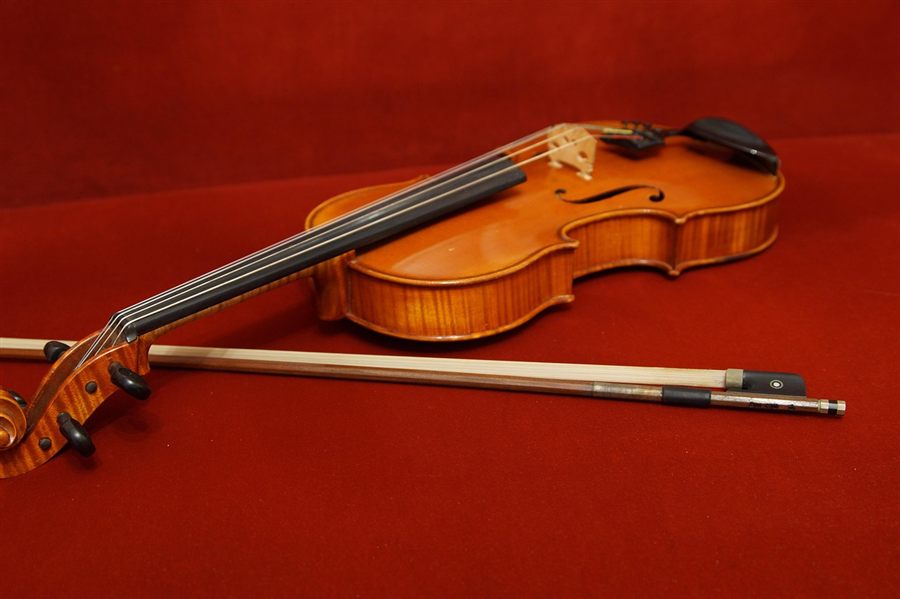
Viola
Eastman VA80
No current price available
Availability: 0/10 (Very rare)
The Eastman VA80 is a fully hand-carved entry-level viola built from solid spruce and maple with genuine inlaid purfling and ebony fittings, prized by teachers for delivering a vibrant, mature tone well beyond what laminate student instruments typically offer.
About the Eastman VA80
The VA80 is carved by hand from seasoned spruce for the top and maple for the back, ribs and scroll, finished in a high-gloss varnish and set apart from cheaper laminate instruments by genuine hand-inlaid purfling rather than a painted or printed line. Ebony is used throughout for the fingerboard, pegs and chin rest, paired with a professionally fitted Despiau bridge. Offered across sizes from 11 to 16.5 inches, the outfit ships with a K.Holtz fiberglass bow and a molded thermoplastic oblong case - a complete, ready-to-play package built around solid, hand-carved tonewood construction that's unusual to find at this price tier.
Where to buy
Unfortunately we can't currently find any offers for this instrument. Check back regularly - we update our listings several times a day.
Sound character of the Eastman VA80
The solid, hand-carved spruce top and maple back give the VA80 a vibrant, noticeably more developed tone than laminate student violas typically produce, a quality dealers and teachers point to as the instrument's clearest advantage over its entry-level price class.
What owners of the Eastman VA80 say
The recurring theme across dealer and teacher feedback is surprise at how much tone and playability this instrument delivers for an entry-level price, consistently credited to its solid, hand-carved construction rather than laminate shortcuts. School and private-studio teachers are specifically cited as recommending it, which carries weight given how many student instruments they see pass through their hands - a teacher's endorsement here reads less like marketing copy and more like an accumulated pattern of satisfied students.
Playability & handling of the Eastman VA80
Dealers and teachers consistently describe the VA80 as offering effortless playability paired with a sound quality that outperforms its entry-level price point. The combination of solid hand-carved tonewood rather than laminate construction is the recurring explanation for why it draws praise from school and private-studio teachers specifically - laminate student instruments tend to sound flat and one-dimensional, while a properly carved top and back can develop more complexity as the instrument settles in. For a first viola or a step up from a laminate beginner instrument, reviewers position it as delivering noticeably more than its price class would suggest.
Recommended accessories & strings for the Eastman VA80
The outfit already includes a K.Holtz fiberglass bow and a molded thermoplastic case, covering everything needed to start right away. A shoulder rest fitted to the player's build is the near-universal next purchase for comfort, and players who stick with the instrument often consider upgrading to a horsehair bow once the included fiberglass bow's limits become noticeable.
Technical data for the Eastman VA80
| Top | Solid spruce, hand-carved |
|---|---|
| Back/ribs/scroll | Solid maple |
| Fingerboard/pegs/chin rest | Ebony |
| Purfling | Genuine hand-inlaid |
| Bridge | Despiau, professionally fitted |
| Finish | High-gloss varnish |
| Sizes | 11 in. to 16.5 in. |
| Included | K.Holtz fiberglass bow, molded thermoplastic case |
The history of the Eastman VA80
Eastman's VA80 occupies a step-up tier within the brand's respected numbered viola range, known for solid craftsmanship at accessible prices.
About Eastman as a manufacturer
Eastman Strings was founded in 1992 by Qian Ni, a graduate of Boston University's School of Music, who began the business by importing student-grade string instruments and personally delivering them by car to violin shops and music stores across the US. By 1994 the business had grown enough to employ a team of experienced instrument makers full-time and establish a dedicated workshop in Beijing. What set Eastman apart from the start was Ni's insistence on traditional violin-making techniques rather than leaning on modern mass-production shortcuts, a commitment that eventually gave the company enough credibility to expand into archtop guitars and mandolins in 2002, flattop acoustics in 2008, and electric guitars from 2012 onward. One detail worth clearing up: Eastman Strings (the Eastman Music Company) has no organizational connection to the Eastman School of Music in Rochester, New York - the two simply happen to share a name, with the school founded in 1921 by Kodak founder George Eastman, decades before Ni's company existed.