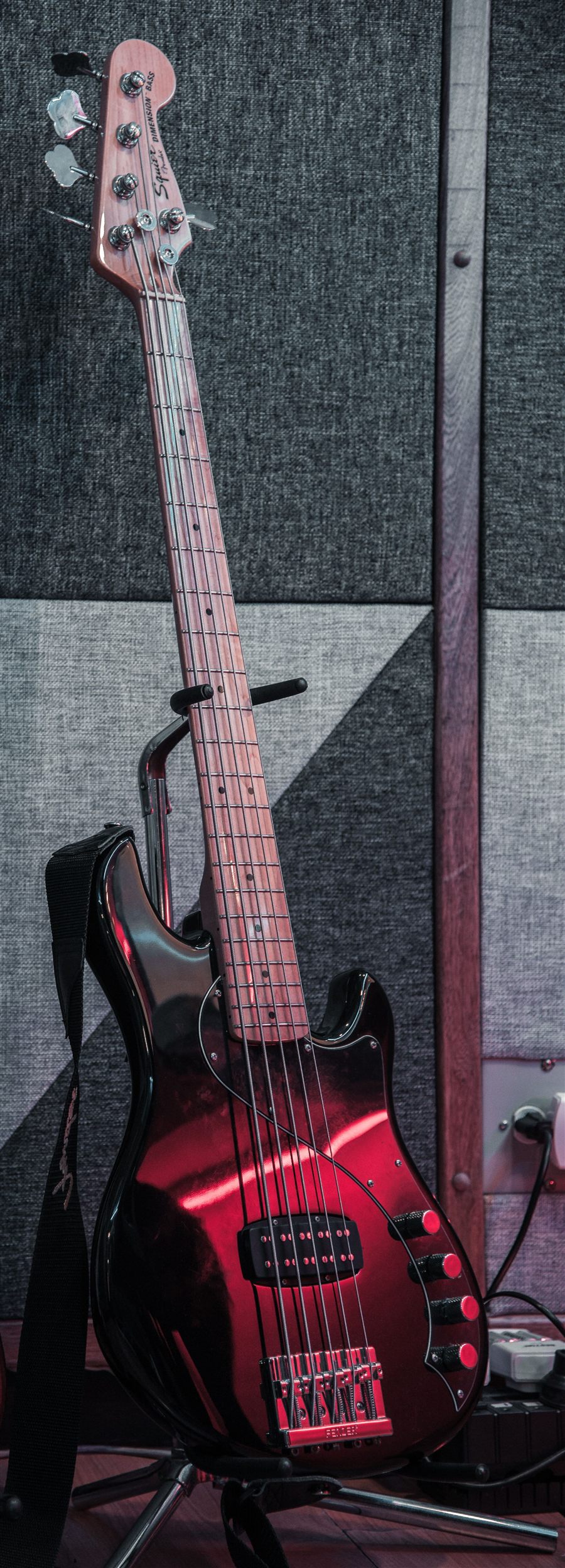
Bass Guitar
Epiphone EB-0 Bass
Price: 266 EUR – 610 EUR
Price history
Cheapest seen
Most expensive seen
Availability: 9/10 (Common)
A Gibson-licensed reissue of the early-1960s SG-shaped short-scale bass, built around a single neck-position humbucker for a thick, vintage low end.
About the Epiphone EB-0 Bass
The EB-0 carries over the SG-shaped mahogany body that Gibson settled on for the model after 1961, when the original's double-cutaway Les Paul Junior silhouette was redesigned to match the newly introduced SG line. Epiphone's version keeps that body in solid mahogany with a bolt-on mahogany neck in a SlimTaper D profile, a rosewood fingerboard with simple white dot inlays, and a single Sidewinder humbucker mounted close to the neck - the same pickup placement that gave the original its famously booming low end. Chrome hardware with nickel tuners and a cherry finish round out a build that, reviewers note, feels noticeably better made than its modest price would suggest, even if the thick urethane finish gives parts of the instrument a slightly less refined feel up close.
Where to buy
Platforms
Price
–
-
Reverb Epiphone Eb 0 Sg Bass Cherry Repaired Hea DS Tock 266 EUR Best price View details
-
eBay Epiphone E-Bass EB-0 gebraucht 293 EUR View details
-
eBay Epiphone E-Bass EB-0 gebraucht 293 EUR View details
-
eBay Epiphone E-Bass EB-0 gebraucht 293 EUR View details
-
eBay Epiphone E-Bass EB-0 gebraucht 293 EUR View details
-
eBay Epiphone E-Bass EB-0 gebraucht 363 EUR View details
-
eBay Epiphone EB-0 SG Type E-Bass Cherry Red 403 EUR View details
-
eBay Epiphone EB-0 SG Bass Cherry 2007 Short Scale E-Bassgitarre 410 EUR View details
-
eBay Epiphone EB-0 SG Bass Cherry 2007 Short Scale E-Bassgitarre 410 EUR View details
-
eBay Epiphone EB-0 SG Bass Cherry 2007 Short Scale E-Bassgitarre 410 EUR View details
-
eBay Epiphone EB-0 SG Bass Cherry 2007 Short Scale E-Bassgitarre 410 EUR View details
-
eBay EPIPHONE E-Bass EB-0 448 EUR View details
-
eBay EPIPHONE E-Bass EB-0 452 EUR View details
-
eBay Epiphone EB-0 SG Bass mit Koffer 465 EUR View details
-
eBay Epiphone SG EB-0 Bass E-Bass Short Scale 469 EUR View details
-
eBay Epiphone SG EB-0 Bass E-Bass Short Scale 470 EUR View details
-
eBay Epiphone EB-0 SG Bass mit Koffer 473 EUR View details
-
eBay Epiphone EB-0 SG Bass Cherry 2007 mit Koffer, guter Zustand 473 EUR View details
-
eBay Epiphone Bass EB-0 474 EUR View details
-
eBay Epiphone EB-0 Short Scale Bass Light Thin Body Guter Zustand 474 EUR View details
-
eBay Epiphone EB-0 SG Bass mit Koffer 476 EUR View details
-
eBay Epiphone Bass EB-0 477 EUR View details
-
eBay Epiphone Bass EB-0 478 EUR View details
-
eBay EPIPHONE E-Bass EB-0 Gebraucht Japan 487 EUR View details
-
eBay EPIPHONE E-Bass EB-0 Gebraucht Japan 487 EUR View details
-
eBay EPIPHONE E-Bass EB-0 Gebraucht Japan 487 EUR View details
-
eBay EPIPHONE E-Bass EB-0 Gebraucht Japan 487 EUR View details
-
eBay EPIPHONE E-Bass EB-0 Gebraucht Japan 487 EUR View details
-
eBay EPIPHONE E-Bass EB-0 Gebraucht Japan 487 EUR View details
-
eBay EPIPHONE E-Bass EB-0 Gebraucht Japan 487 EUR View details
-
eBay Epiphone SG Bass E1 EB-0 Cherry E-Bass 487 EUR View details
-
eBay EPIPHONE SG BASS EB-0 488 EUR View details
-
eBay Epiphone EB-0 E-Bass Mahagoni Palisander Short Scale gebraucht 496 EUR View details
-
eBay EPIPHONE SG BASS EB-0 517 EUR View details
-
eBay EPIPHONE SG BASS EB-0 518 EUR View details
-
eBay EPIPHONE E-Bass EB-0 Gebraucht Japan 519 EUR View details
-
eBay Epiphone SG Bass E1 EB-0 Cherry E-Bass gebraucht 531 EUR View details
-
eBay Epiphone SG Bass E1 EB-0 Cherry E-Bass gebraucht 531 EUR View details
-
eBay Epiphone EB-0 SG Bass Cherry Short Scale 545 EUR View details
-
eBay Epiphone EB-0 Cherry SG Bass 2013 Made in Indonesia 578 EUR View details
-
eBay Epiphone EB-0 Cherry SG Bass Epiphone 2013 591 EUR View details
-
eBay Epiphone EB-0 Short Scale Bass gebraucht 607 EUR View details
-
eBay Epiphone EB-0 Short Scale Bass gebrauchte Gitarre 610 EUR View details
-
eBay Epiphone EB-0 Short Scale Bass gebrauchte Gitarre 610 EUR View details
-
eBay Epiphone EB-0 Short Scale Bass gebraucht 610 EUR View details
No platform selected – pick at least one above.
Some links below are affiliate links. We may earn a commission at no extra cost to you.
Source: https://reverb.com/item/92100392-epiphone-eb-0-sg-bass-cherry-repaired-hea-ds-tock
Sound character of the Epiphone EB-0 Bass
The single Sidewinder humbucker sits close to the neck, the same position that gave the original Gibson design its famously huge, booming low end and earned it the nickname 'Mudbucker' among players - a deliberately bass-forward voicing rather than a balanced one. On the Epiphone version, that translates into a growling, low-heavy tone with a surprisingly serious bottom end for the instrument's compact size, though some players find it sounds comparatively hollow next to a vintage Gibson original. The solid mahogany body adds to the warm, earthy foundation typical of that wood, while the limited tonal range of a single pickup and a tone control many describe as barely effective mean the bass offers one strong, characterful voice rather than broad versatility.
What owners of the Epiphone EB-0 Bass say
Opinion on the tone splits fairly evenly: some players find it leans too muddy for their taste, while others praise that same thick, low-heavy character with clear highs as exactly the authentic '60s vintage voice they were after, occasionally comparing it loosely to a Rickenbacker's warmth. Build quality for the roughly 200-250 dollar price point draws consistently strong marks, though consistency between individual units is debated - some owners describe being pleasantly surprised by how well their bass played and sounded, while others report trying several units before finding one they liked. The most repeated frustration by far is the pronounced neck dive when worn standing, which one reviewer flatly called tiresome; a single pickup limiting tonal versatility for slap technique, a tone control some find barely effective, and 20 frets feeling restrictive to a few players round out the recurring complaints.
Playability & handling of the Epiphone EB-0 Bass
The short 30.5-inch scale and SlimTaper neck profile consistently draw praise for feeling fast and comfortable under the fretting hand, making the bass an easy reach for smaller players or anyone coming from guitar. The flip side shows up the moment the strap goes on: the body's balance point sits well behind the neck, producing a pronounced neck-dive that forces the fretting hand to prop the neck up rather than rest on it, a recurring complaint across owner reviews. A few players also mention the squared-off nut edge catching slightly against the hand during fast position changes. Build quality for the price draws consistent praise - one owner reported the finish surviving several drops undamaged - though opinions on overall consistency vary, with some describing hit-or-miss quality control between individual units.
Recommended accessories & strings for the Epiphone EB-0 Bass
For players chasing the bass's vintage 1960s pedigree, flatwound strings are the classic complement to the neck-position humbucker - they trade some top-end snap for a softer, warmer fundamental with a present midrange that sits in a mix without fighting for space, at the cost of needing a bit more left-hand effort than roundwounds. Short-scale-specific flatwound sets exist from several string makers and are built to the shorter 30.5-inch length rather than cut down from standard sets. Given the bass's well-documented neck-dive tendency, a wider, non-slip strap or a strap lock mounted further back on the body is a practical addition rather than a cosmetic one.
Technical data for the Epiphone EB-0 Bass
| Body | Mahogany, SG shape, urethane finish |
|---|---|
| Neck | Mahogany, bolt-on, SlimTaper D profile |
| Scale length | 30.5" (short scale) |
| Fingerboard | Rosewood, white dot inlays, 20 frets |
| Nut width | 1.50" |
| Pickup | 1x Sidewinder humbucker (neck position) |
| Hardware | Chrome hardware, nickel tuners, adjustable bridge |
| Finish options | Cherry |
| Controls | Volume, Tone |
Price history for the Epiphone EB-0 Bass
Cheapest seen: 266 EUR · Most expensive seen: 610 EUR
Cheapest seen
Most expensive seen
The history of the Epiphone EB-0 Bass
Gibson introduced the original EB-0 in 1959 as a response to the EB-1's weak sales, initially giving it the double-cutaway body of the then-popular Les Paul Junior while keeping the EB-1's mahogany construction and 30.5-inch scale. That first version came only in cherry red. In 1961 Gibson redesigned the body to match its new SG shape, the form the EB-0 would keep for most of its production run. The following decade brought a steady stream of refinements: a metal pickup cover replaced plastic in 1962, hardware moved from nickel to chrome plating around 1964-65, the neck was thinned and the bridge upgraded to a fully adjustable design with individual nylon saddles in 1966-67, and the headstock switched to a slotted design with tuners at ninety-degree angles by 1969-70. A 1972 revision enlarged the body, swapped in a maple neck, and moved the pickup further from the neck. Gibson built just over 20,800 EB-0 basses before ending production in 1979, alongside a long-scale EB-0L variant and a rare built-in-fuzz EB-0F model that sold poorly. Epiphone's current EB-0 is a Gibson-licensed reissue drawing on that early-1960s SG-body era of the design.
About Epiphone as a manufacturer
Epiphone's roots go back to 1873, when Greek lumber merchant Anastasios Stathopoulos began building and repairing fiddles and lutes alongside his timber trade. After emigrating to the United States in 1903, he continued making instruments, including mandolins, from Long Island City, New York. The company took the Epiphone Banjo Company name in 1928 and expanded into flattop and archtop acoustic guitars the same year; by 1931 it was building an archtop aimed squarely at Gibson's L-5, kicking off a rivalry between the two companies that ran through the 1930s. That rivalry ended in 1957, when Chicago Musical Instruments - Gibson's parent company at the time - acquired a financially weakened Epiphone, folding it in as Gibson's companion brand. Production later shifted overseas, moving to Japan in the early 1970s and then mainly to Korea from the 1980s onward through contractors licensed by Gibson, the arrangement that today produces instruments like the EB-0 reissue at prices well below Gibson's own US-made models.
Notable players & recordings featuring the Epiphone EB-0 Bass
The players most associated with this design all played the vintage Gibson original rather than the current budget Epiphone reissue, but they explain why the shape and pickup placement still carry weight today: Jack Bruce of Cream used a 1967 Gibson EB-0, Dennis Dunaway of Alice Cooper played a metallic-green example nicknamed 'The Frog,' Mike Watt of the Minutemen and fIREHOSE still plays a heavily modified 1965 unit, and Ronnie James Dio used a red 1961 EB-0 on early Elf recordings. Dealer marketing copy also links the model to Bill Wyman of the Rolling Stones and John Entwistle of The Who, though that specific pairing could not be independently confirmed beyond retailer sources.