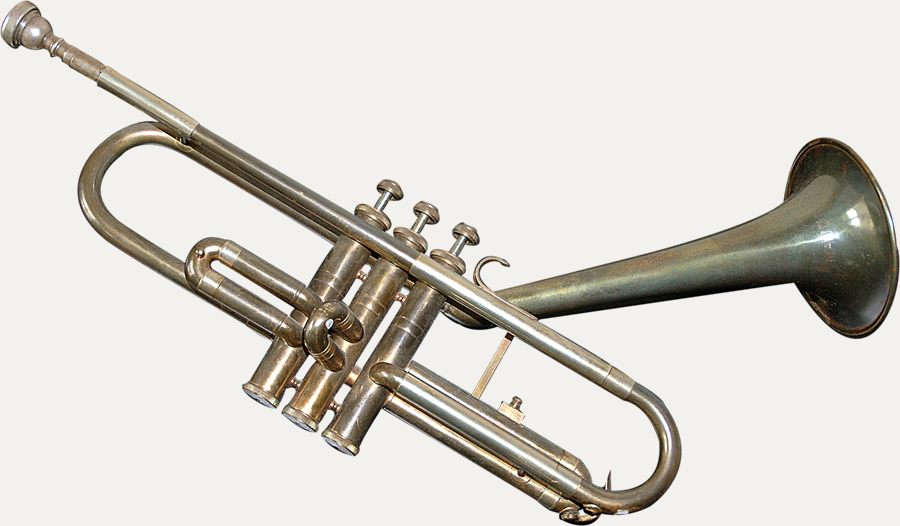
Lacquer is the cheapest and mechanically tough default finish. Silver plate tarnishes, but it shrugs off scratches and can be polished back. Opinions on tone differ: the effect of the finish, if any, is much smaller than that of mouthpiece, bore, bell and player. What matters far more for durability and resale value is how you care for the horn after playing, because that decides whether a good-looking trumpet ends up in the repair shop a few years on.
The finishes at a glance
- Clear lacquer over brass: the most common finish, nearly standard on student models. It is a very thin protective film that separates the brass from air and sweat. It is the least expensive finish and quite tough, but it can wear through or chip where the hand grips, and then the exposed brass tarnishes.
- Silver plate: a silver layer applied by electroplating, typically around 25 to 30 micrometers (rule of thumb), adding roughly 25 to 30 grams. It does not chip like lacquer, but it does tarnish over time. The layer is microscopically porous, so acidic hand sweat can work through to the brass underneath. This usually shows up later as dull, cracked or blistered patches, mostly in the grip zones.
- Gold plate: usually a very thin gold layer (about 2 to 3 micrometers) over silver. Gold is the most corrosion-resistant option and hardly needs polishing. It is expensive and trickier than silver when it comes to later solder repairs.
- Raw brass: uncoated. It darkens to a golden brown quickly and needs constant wiping and polishing to stay bright. Many players like the unmuffled feel, but it is not practical.
- Nickel: hard, scratch-resistant and unaffected by sweat, but greyer and duller than silver. Adhesion can be a problem (bubbling, peeling), which is why nickel is rare on trumpets.
- Satin or matte variants: a matter of looks and feel. Whether they change tone has not been shown.
Gold lacquer is not gold at all, just tinted clear lacquer, and belongs in the same category as ordinary lacquer.
Does the finish change the sound?
Short version: an audible effect is disputed, and a large one is unlikely. What can be said reliably:
- The myth that lacquer makes the sound darker: there is no scientific evidence for it. Lab testing also suggests a finish by itself only changes the sound noticeably when the process changes the thickness of the metal, for example by stripping or buffing.
- What players report: in side-by-side comparisons of otherwise identical models, some describe the silver horn as more disciplined and compact, with a little more resistance, and the lacquered one as livelier but sharper. A somewhat darker, stronger sound at soft and medium volume and a more brilliant one at fortissimo is a frequent description of silver. Gold is often called more velvety and richer in overtones. These are individual perceptions, not measurements.
- Why comparisons are hard: no two trumpets are exactly alike. Variation in bore, solder joints and valves is often larger than any difference from the coating. Expectation also plays in: if you know you are playing silver, you tend to hear brilliance.
- Finish damage: chipped lacquer or tarnished silver does not hurt the sound in practice. It is a cosmetic matter and, once corrosion begins, a question of the metal itself.
Practical advice: choose by response, intonation and valve action, not by color. If you can try two otherwise identical horns, play both with the same mouthpiece at the same volume and have someone else listen. If you hear nothing clear, decide on upkeep and price.
Durability, looks and patina
Lacquer
Intact lacquer keeps brass clean very well. But it wears away permanently: where it has rubbed through you see a different shade, and later dark spots. Only a relacquer evens it out again, which is expensive (see costs). Deep scratches down to the metal also become starting points for corrosion. High acidity in sweat speeds up wear, and some players use a leather wrap on the grip areas or wash their hands before playing.
Silver
Silver goes grey to blackish from air and sweat. This tarnish is cosmetic and polishes off. A thin tarnish film even protects the surface a little. What matters is not to polish too often, because each polish removes material. Constant polishing can wear the plate through in spots until the brass shows. Deep scratches barely improve with polishing; they would need replating.
Gold and nickel
Gold stays presentable longest. Nickel is hard but can lift from the base. Both are less common on the used market, so look closely at the condition of the layer.
Raw
Raw brass picks up fingerprints and keeps changing. You can like that patina, but it is not more durable, as sweat works into the metal unhindered.
Care after playing
The biggest lever for durability is a short routine after every practice session, whatever the finish.
- Drain the water: press the water key (spit valve) and let the condensation run out. Pull the tuning slide and valve slides out briefly one after another and shake them out. When removing a valve slide, hold its valve piston down so air is not trapped in the valve and the seal is not strained.
- Dry the inside: a cloth or pull-through takes residual moisture out of the leadpipe and tuning slide. It helps against deposits.
- Wipe the outside: a soft, dry cloth (a silver polishing cloth for silver) removes sweat, grease and fingerprints. On any finish this is the most important single step, because sweat is the main enemy of lacquer and plating.
- Oil the valves: pull the pistons out one at a time, put two to three drops of valve oil on the piston, and reinsert it with a gentle twist, making sure the guide seats (numbers legible, finger hook in position). Oiling every few days up to before each session is common, depending on the oil and how much you play.
- Then case it: the trumpet goes into the case dry, not damp.
Valves, slides and the water key
- Valve oil: there are thin, medium and heavier oils. If a valve is sluggish or fails to seal, try another viscosity. Do not use household oil, which gums up.
- Slide grease and slide oil: the main tuning slide and the second slide (no trigger) get a thin layer of grease, while triggered slides (first and third) are usually oiled. Wipe off the excess so it does not combine with dirt into a paste. A slide should glide without wobbling or sucking.
- Water key: the cork wears soft and leaky over time. If it keeps dripping or hissing when closed, a new cork is due, which is a small job. Clean the hole under the key now and then, because residue collects there.
- Stuck parts: never force a jammed slide or mouthpiece. A stuck mouthpiece needs the proper puller or a shop, or the leadpipe can be bent.
The bath: frequency, temperature, soap
About once a month (more often for heavy players and sweaty hands, every few months for occasional players) the trumpet gets a bath. It flushes out saliva residue, grease and mineral deposits before they gum up valves and slides.
- Put towels in a plastic tub or large basin so nothing dents.
- Fill with lukewarm water (pleasantly warm to the hand, never hot) and add a mild dish soap without additives. Hot water and harsh cleaners attack lacquer.
- Take out the pistons and slides (holding the matching piston down when pulling each slide). Lay the pistons out so you can put them back correctly.
- Run the snake brush gently through bends, leadpipe and bell, and the valve brush through the casings. Rinse everything with clear lukewarm water.
- Dry the parts thoroughly and let them sit until completely dry. Only then oil and grease.
Lacquer should not soak for long: a short stay followed by a rinse is enough. Silver-plated horns tolerate the bath without trouble, and rinsing the leadpipe every week or two is enough between baths. Never put a trumpet in the dishwasher.
Strong acids, undiluted household descalers and salt-and-foil baths are not home care: they can alter lacquer and silver and attack solder joints. If lime, green crust or deposits sit so firmly that lukewarm water does not shift them, have the horn chemically cleaned in an ultrasonic bath. That is shop work.
Mouthpiece and hygiene
The mouthpiece touches saliva and skin and belongs in lukewarm soapy water once a week. Clean the bore with a mouthpiece brush, rinse clear and dry. A silver cloth is enough to polish a mouthpiece; scouring pastes wear off the plating.
- Brush your teeth or rinse your mouth before playing so less sugar and saliva end up in the horn. Eating or drinking right before playing gums up valves and promotes corrosion.
- Do not pass on a dirty instrument. If you share a horn, use your own mouthpiece.
- Smells or slime in the leadpipe are a sign the next bath is due.
Tarnished silver: polish gently
A silver polishing cloth is entirely enough for routine care. It removes tarnish and fingerprints with minimal abrasion. Liquid or paste silver polishes are much more aggressive and belong in use only occasionally (rule of thumb: once or twice a year, sparingly), preferably ones without scouring particles. Never rub with a kitchen sponge or scouring powder. Polish along the length of the tubes rather than in circles, and leave solder joints and engraving alone. A tarnish film between cleanings is harmless. If the plate turns dull and brownish in the grip areas despite regular care, it has usually worn thin there, and a shop must decide whether replating is worthwhile.
Lacquer care: stay gentle
- Use only soft cloths; for stubborn dirt, a lightly damp cloth with a little mild soap, dried right away.
- No metal polish and no solvents. Metal polish contains abrasives that scratch lacquer dull or wear it away, and solvents can dissolve it.
- Special lacquer polishes only sparingly and as directed. When in doubt, wiping is enough.
- Around the water key, valve caps and edges lacquer chips earliest. Wipe a drop of water there off right away.
For both finishes: a buffing wheel or abrasive compound does not belong in amateur hands. It removes material, thins the wall and can smear engraving. That is shop work.
Storage and transport
- Keep the trumpet in the closed case, not left on a stand, when you will not play it for a while. The stand is for short breaks.
- The case should be dry and out of direct sun or a parked car. Heat makes grease run, and moisture promotes corrosion.
- No music books or objects in the case compartment that press on the bell or valves. Paper also holds moisture.
- Before long storage, oil the valves and grease the slides so nothing seizes, and have a quick look after a few weeks.
Red rot, pitting and warning signs
Red rot (dezincification) is the most serious ageing damage in brass. Zinc is leached out of the alloy, leaving porous copper behind. Typical signs:
- pink to red dots or patches, especially in the leadpipe, in slides, on valve bends and around the water key,
- rough, flaky material inside that comes off on the brush,
- spots where the tube feels soft or gives when pressed.
Small dots are often still harmless, but dezincified material cannot be turned back; it can only be replaced, which in a shop means replacing whole tube sections. For a used purchase, red spots in the leadpipe are a strong warning sign, and if in doubt, walk away. Care helps prevent it: rinsing, drying and not playing right after eating.
Pitting (small craters) occurs mainly on valve casings and often comes from strongly acidic sweat. If the area still feels rough after wiping and holes begin to form, ask a shop. With silver, also check whether green or red brass shows through under blistered or cracked patches.
Costs
Care products
- Valve oil: about $6 to $10 per bottle (as of Oct. 2026),
- Silver polishing cloth: about $13.
Price premium for silver when buying new
On standard models the premium is typically in the low to mid hundreds of dollars. Example: the Yamaha YTR-2330 in gold lacquer at about $1,869 versus the silver-plated YTR-2330S at about $2,109 (as of Oct. 2026), roughly $240 more. At that difference the upgrade is more about looks and care habits than about an audible gain.
Shop work
- Chemical or ultrasonic cleaning: about $100 to $130 (rule of thumb, as of Oct. 2026), with an extra silver polish often adding about $40 to $80.
- Relacquering: varies by shop, get a quote. Isolated reports mention figures around $225 for polish and lacquer alone, with much more once dents or prep work are included.
- Replating: varies widely; reports of $800 to $1,500 for a full replate with dent removal are common. Shops stress that prep work makes up much of the cost.
Recoating almost never pays off on an inexpensive student horn, since it can cost more than the instrument. It also changes the metal: stripping and rebuffing thins the wall slightly, which some describe as a change in sound.
The used market: what the finish tells you
- Tarnished silver: no problem, cosmetic, polishes off. More a sign the horn was not polished than a defect.
- Silver with blisters, cracks or brass showing through: sweat has worked through the layer, wear to the substance.
- Lacquer worn through in the grip zones: honest wear, cosmetic as long as no red or green corrosion shows beneath the lacquer.
- Conspicuously fresh lacquer: can point to a repaired injury. Ask about the original finish and what was done.
- Deep scratches to bare metal: can lead to corrosion later.
Mechanics beat looks: a beautiful horn with poor valve compression is not playable, while a dull one with tight valves is. For the full buying checklist, see buying a used trumpet, and for student versus professional models, student vs. pro trumpets on the used market.
What a shop should handle
- chemical and ultrasonic cleaning for lime, green crust and deposits,
- stripping, buffing, relacquering and replating,
- replacing tube sections affected by red rot,
- soldering, dent removal, valve overhauls.
Here the article only explains what is done and how you can recognize the need. Get a quote before you commission anything.
Common mistakes
- Putting the trumpet in the case damp and not wiping it down.
- Polishing too often and too roughly, especially silver.
- Hot water or a dishwasher for lacquer.
- Household oil instead of valve oil, or grease where it does not belong.
- Playing right after eating.
- Putting finish-based tone claims ahead of mouthpiece and playing.