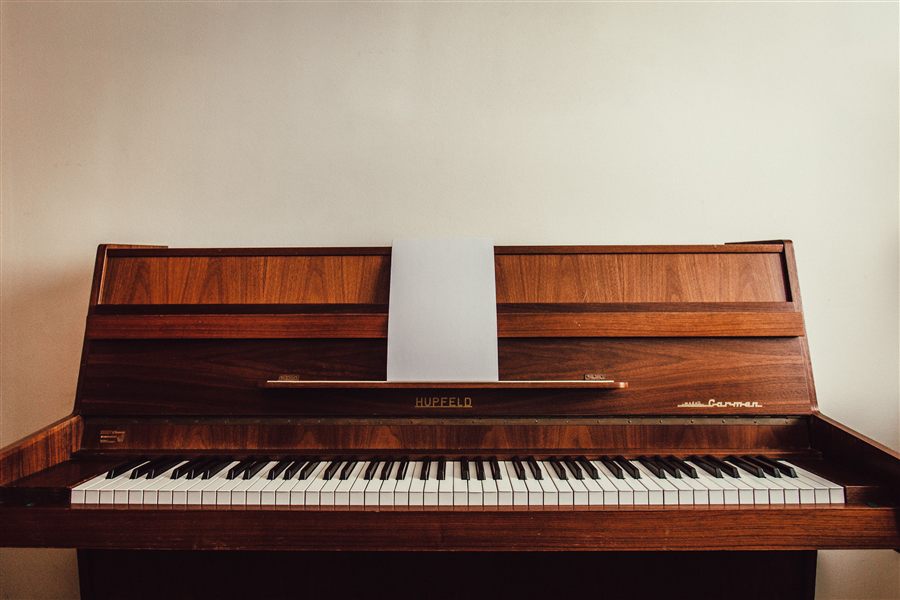
The action is the mechanism that translates a key press into a hammer striking the strings, and its condition affects both how a piano feels and how it sounds far more directly than cosmetic case condition does.
What to look for
- Hammer shape: healthy felt hammers are rounded; string grooves worn into the felt, or flattened hammer tips, mean the tone will be harsher and the hammers may need reshaping or replacing.
- Even response: play scales and chords across the full keyboard - keys should feel and sound consistent, without individual notes lagging, sticking or double-striking.
- Key dip and touch weight: keys that sink unevenly or feel noticeably heavier/lighter than their neighbors suggest the action needs regulation.
- Moth and insect damage: felt is an attractive material for moths in long-unplayed pianos - look for small holes or a powdery residue on the hammers and other felt parts.
Reshaping worn hammers or fully regulating an action are routine, well-understood services for a piano technician, but they cost money - factor that into any offer on a piano showing these signs.