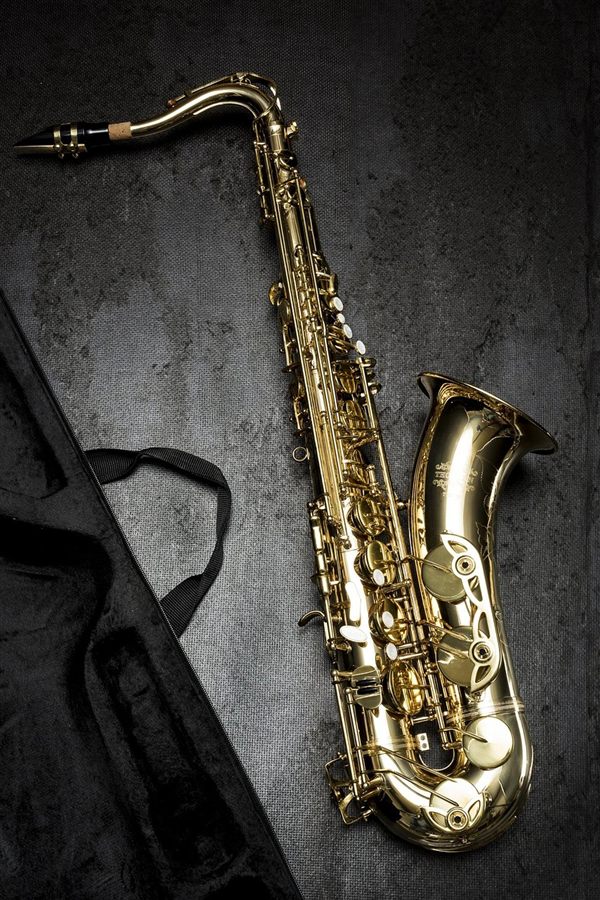
A saxophone's tone and playability depend as much on the mouthpiece-and-reed combination as on the horn itself, which is why two players on the same saxophone can sound completely different. The two parts are matched to each other, not picked independently.
How tip opening and reed strength interact
- A wider tip opening (more open facing) generally needs a softer reed - a hard reed on a wide-open mouthpiece becomes difficult to control.
- A narrower, closer tip opening works better with a harder reed, which responds more easily through the smaller gap.
Softer reeds are easier to produce a sound on but can sacrifice pitch stability and control, and can sound thin or overly bright. Harder reeds add resistance and can deepen the tone, but a reed too hard for the mouthpiece makes the sound airy, strained and hard to control.
What this means when buying used
A used saxophone rarely comes with the mouthpiece that suits a given player - the included mouthpiece is a starting point, not a fixed setup. When trying an instrument before buying, it is worth testing it with a couple of different reed strengths rather than judging the horn on a single reed that may simply be mismatched to that mouthpiece.