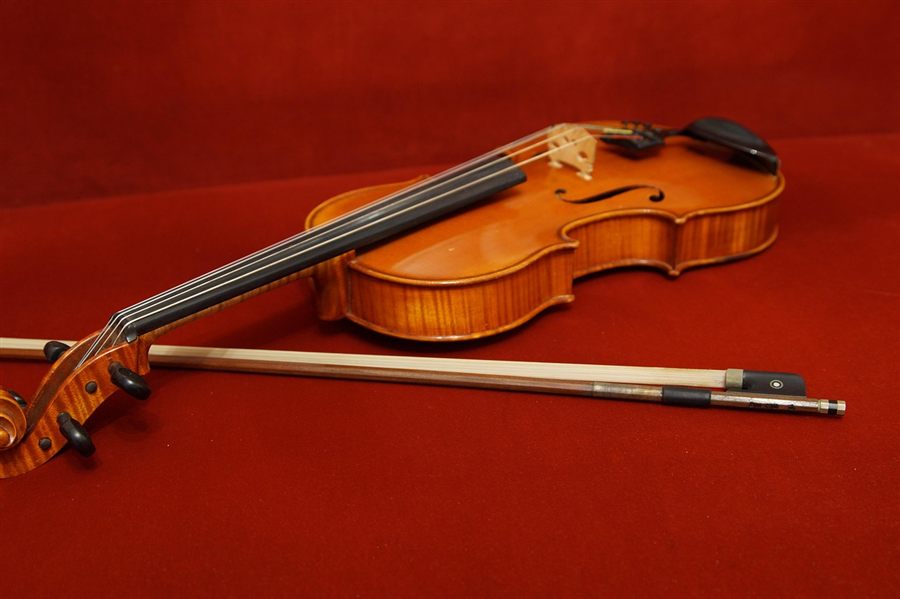
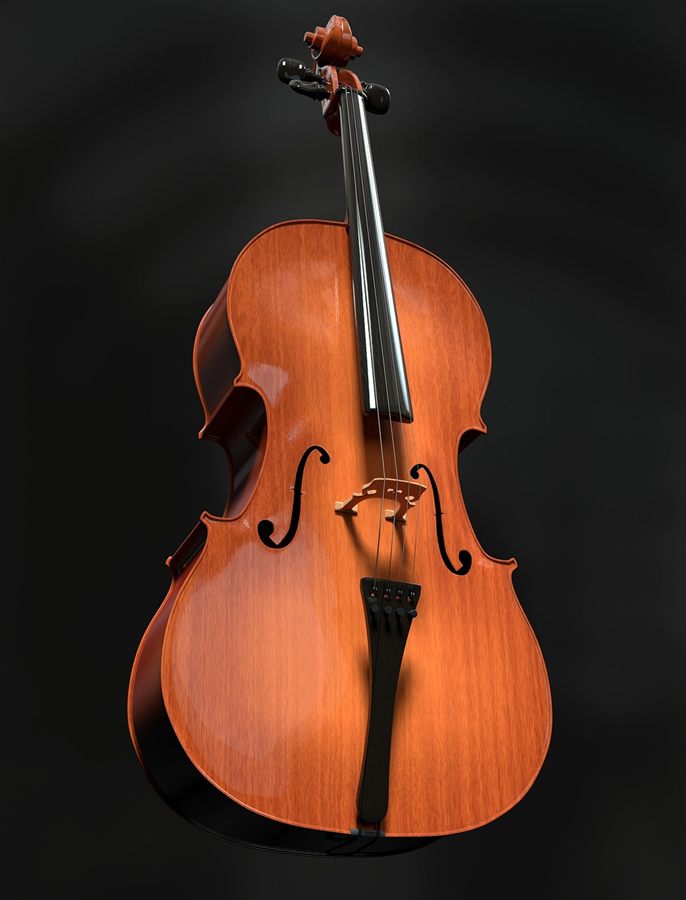
Short answer: A violinist can carry most of their technique over to viola. What is new is the alto clef, wider finger spacing, a heavier bow that needs more weight in the stroke, and a larger, heavier instrument. For a brand-new student, viola is an equally valid first choice if the size fits the arm and the darker sound appeals.
This guide covers what actually changes, how to find the right size, the mistakes switchers make most often, and what renting or buying costs. For choosing and inspecting a used instrument, see buying a used viola.
The main differences at a glance
| Feature | Violin | Viola |
|---|---|---|
| Adult body length | about 14 in (35.5 cm) | mostly 15.5 to 17 in (40 to 43 cm); 38 to 47 cm possible overall |
| Tuning | G – D – A – E | C – G – D – A (a fifth lower) |
| Clef | Treble | Alto, treble for high passages |
| Bow weight | about 58 to 62 g | about 70 to 74 g, wider hair |
| Sound | bright, brilliant | dark, mellow, slightly husky |
| Vocal range | soprano | alto |
Treat the numbers as ballpark figures. Violas are not built to one fixed standard the way violins are, so two instruments with the same body length can differ in string length, width and weight.
Size, string length and weight
Why there is no "standard viola"
A full-size violin has one accepted size. Adult violas span a range: small models around 38.5 to 39.5 cm, medium around 40.5 cm and large around 42 cm of body length. Acoustically, a body of roughly 54 cm would be ideal, but nobody could play it, so every viola is a compromise between tone and comfort.
String length matters more than body length
What decides playability is the vibrating string length, not the body alone. String lengths from roughly 34 to 40 cm exist on the market. For professionals, around 36 to 36.5 cm is often considered a good value, and from about 35.5 cm the instrument starts to sound distinctly like a viola. Shorter string lengths are easier to reach, longer ones tend to give a bit more power. Body width often influences fullness of tone more than length does. A shorter string length and shallower ribs can make a viola of the same body length feel much more comfortable for the same player.
Weight and posture
A viola is larger and heavier than a violin. You notice it in the shoulder, neck and left arm after longer sessions. The instrument sits lower and a little farther from the body, so a chin rest and shoulder rest that suited the violin often need adjusting or replacing. How high a rest should be depends on neck length, shoulder width and the instrument, so adjust in small steps.
Strings and tuning
The viola is tuned C – G – D – A, exactly a fifth below the violin. Three strings (G, D, A) have the same pitch on both instruments, so those strings feel familiar in terms of note names, just with wider spacing. New for violinists is the low C string with its rough, rich character. In exchange, the bright E string is gone, which explains the darker overall sound.
The string types are the same as for violin: gut for a warm, overtone-rich sound that needs frequent tuning, synthetic core as the standard for students with stable pitch, and steel core for a bright, direct tone. Thicker strings need more tension and sound fuller but respond more slowly. Changing strings about every six months is a common rule of thumb, sooner for heavy playing. A viola A string can be used on a violin if it is shortened by about 5 cm at the peg end, and only in full size. Mixing violin strings onto a viola is rarely sensible because the string lengths differ. More on this topic: viola strings and setup compared with violin.
Alto clef and reading music
The alto clef is the first hurdle everyone notices. Middle C sits on the center line, so notes land in different places than in treble clef. For high passages, in the highest register, the music switches to treble clef, so you need to read both.
Violin experience helps only indirectly. Reading fluency comes from repetition. Methods that work:
- Short daily reading sessions with easy pieces in alto clef rather than one long weekly session.
- Play slowly and link the note position directly to fingerings instead of translating note by note into treble clef.
- Start with simple duets and studies that stay in first position.
- Practice clef changes in high positions separately.
A complete beginner has no disadvantage here, since alto clef is simply learned from the start.
Left hand: finger spacing and positions
Notes lie farther apart on a viola, most noticeably in lower positions. The gap between first and second finger is wider and the hand has to stretch more. Switching violinists often place their fingers too close together at first, so the pitch comes out sharp. Helpful habits:
- Check intonation against a tuner or reference pitch and the open strings rather than relying only on a violin-trained ear.
- Keep fingerings simple at first and practice shifts deliberately, because distances are longer.
- Keep the hand relaxed. Tension tires you faster and worsens intonation.
- Take short breaks more often, since the bigger instrument fatigues the arm and shoulder sooner.
Players with small hands should look at a viola with a shorter string length. That need not cost sound if the instrument is well built.
Bow arm and bow
A viola bow is shorter, heavier and has wider hair, especially near the frog. It weighs roughly 10 to 15 g more than a violin bow. The thicker strings speak more slowly, so you start the stroke a touch earlier and put more arm weight into the string. The typical mistake is playing too light and too fast, which leaves the tone thin and scratchy. A calmer, more sustained stroke with more contact works better. A violin bow is fine for trying things out but often does not sound its best on a viola. Bow size follows the instrument, with a 4/4 bow belonging to adult violas.
Sound and role in the ensemble
The viola plays the alto voice of the string family and links violins and basses. In a string quartet and in an orchestra it often carries inner voices and accompaniment. The sound is full, soft and dark, often described as slightly melancholic with a smoky undertone. Soloists have a larger repertoire on violin, but violists are scarcer in ensembles and therefore often in demand, which makes switching attractive for violinists who want a seat in a school or community orchestra.
Violin or viola first? Deciding
- Viola fits if you like a dark, warm tone, enjoy ensemble playing and have the arm length.
- Violin fits if you mostly want melody parts and solo repertoire, or you have very small hands.
- Children often start on violin because there is more material and more teachers. Children's violas and suitable strings are available today, so starting directly on viola is possible.
- To try it out, renting lets you test size and sound without committing.
Some beginners bridge the gap with a violin strung with viola strings. That is a stopgap: the reach stays short and the sound is not that of a true viola.
Finding the right size
Arm length is the primary measure. Extend the left arm straight to the side and measure from the base of the neck to the middle of the palm. As a rough guide for adults, a 16 in viola fits an arm of about 23.5 in, smaller 15 to 15.5 in models suit shorter arms (about 22 to 23 in), and 16.5 in or more fits about 24 in and up. If you fall between two sizes, choose the smaller one.
Then do the fit check: put the instrument under the chin and extend the left arm under the body. Your fingertips should be able to curl around the scroll with the elbow slightly bent. If the arm reaches comfortably past the scroll, the instrument is too small; if you have to overextend, it is too large. Children are deliberately sized small, with swaps planned as they grow. Adults today also lean toward smaller full-size violas because they spare the shoulder and hand. Try several instruments, play scales in all positions, fast and slow passages, with and without vibrato.
Common mistakes when switching
- Choosing too large a viola because "adults play 16 inch". The result is tension and poor intonation.
- Carrying over the violin bow and bow technique unchanged, which leaves the tone thin.
- Not adjusting shoulder rest and chin rest, so the heavier instrument slips or strains the neck.
- Not adapting finger spacing, so notes come out sharp.
- Translating alto clef into treble clef in your head instead of reading it directly.
- Practicing too long at a stretch early on, leading to fatigue.
What carries over directly
Bow control, finger independence, vibrato mechanics, sense of rhythm and general musicianship carry over without starting from scratch. The switch is not a second education but a physical and reading-related fine-tuning. How long it takes depends on practice frequency and prior experience, and no fixed duration can be quoted honestly. Short daily practice tends to help more than rare long sessions, and the physical adjustment often takes longer than learning the clef.
Costs and getting an instrument in the US
Prices are ballpark figures and vary by shop.
- Renting: Monthly rates for a student viola range widely by shop and instrument condition, roughly from the low teens up to about 35 USD per month for typical student outfits (as of Oct. 2026). Many programs ask for a three-month minimum and often apply payments toward later purchase.
- Buying new: Student violas are commonly about 595 to 800 USD, intermediate about 800 to 2,000 USD, and professional above 2,000 USD (as of Oct. 2026). Complete student outfits with case, bow and rosin are often found in the range of about 300 to 500 USD at the budget end.
- What to look for: A solid carved spruce top, maple back and sides, and an ebony fingerboard. Laminated or plywood instruments sound noticeably worse. A famous maker's label inside a cheap instrument is usually meaningless.
Budget for accessories and the occasional string change. For the second-hand market see buying a used viola.
Learning material and lessons
Etude and repertoire books written in alto clef from the start are available. Which suits you depends on your level. A teacher experienced on viola can correct posture, bowing and intonation from day one, which saves a lot of time during a switch.
Frequently asked questions
Is viola harder to play than violin?
Not inherently, but it is more physically demanding: wider spacing, more weight, more bow force. Technically it is not simply a big violin, because bowing and response differ noticeably.
Can I keep using what I learned on violin?
Yes, most of it applies. New are mainly the clef, the spacing and the bow weight.
Do I need a different bow?
For good playing, yes. A violin bow works for trying things out; a viola bow with more weight and wider hair makes sense long term.
Which size should an adult choose?
Usually between 15.5 and 16.5 inches, based on arm length and comfort. When in doubt, the smaller one.