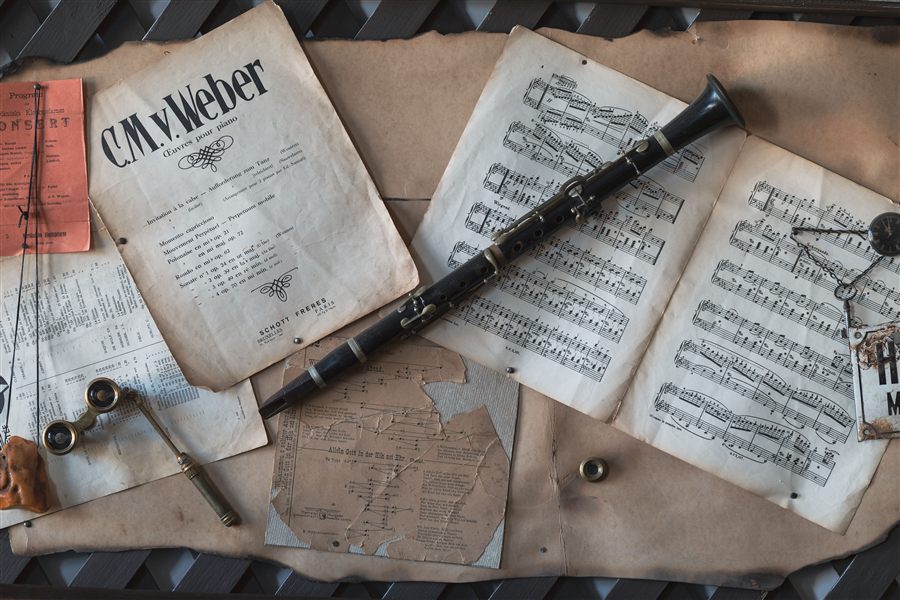
Short answer: In the US, almost everyone plays the Boehm system, and it is what school bands, teachers and method books assume, so a beginner should buy a B-flat Boehm clarinet. The Oehler system and the Reform Boehm are specialist choices tied to particular orchestras and teachers. The A clarinet is a second instrument you add later if an orchestra part calls for it, not a starter.
The Clarinet Systems at a Glance
Every system shares the basics: a single-reed mouthpiece, a cylindrical-ish bore that overblows at the twelfth, and a key mechanism that closes tone holes your fingers cannot reach. The differences lie in key layout, bore, and the mouthpiece and reed setup that goes with it.
Boehm System
The Boehm system (also called the French system) was developed between 1839 and 1843 by Hyacinthe Klosé and Louis Auguste Buffet, borrowing ideas from Theobald Boehm's flute mechanism. A standard instrument has 17 keys and 6 rings (often written 17/6). The fingering is logical, the mechanism uses straightforward levers, and the tone is generally described as brighter, more flexible and richer in upper partials, which suits jazz, pop and contemporary writing. It is the standard across the US, the UK and most of the world, and virtually every method book and school-band instrument is built around it.
Oehler System
The Oehler system descends from the clarinet of Mozart's time and the improvements of Iwan Müller. Oskar Oehler brought it to its modern form around 1905. It typically has 20 to 22 keys, several rings and roller-and-slide mechanisms for the little fingers. A "full Oehler" can reach around 27 keys, with extra mechanisms for awkward notes such as low E/F and corrected fork fingerings. It also has a narrower bore and a longer, narrower mouthpiece that calls for firmer reeds (around strength 2.5). The sound is darker, warmer and less bright. The system is used mainly in central European orchestras such as the Berlin and Vienna Philharmonics and in the teaching traditions behind them. In the US it is rare, which matters for teachers, repair and resale.
Reform Boehm
The Reform Boehm was drafted from 1895 by Ernst Schmidt to combine the darker Oehler-style tone with Boehm fingering. Fritz Wurlitzer built the first one in 1949 for a clarinetist of the Concertgebouw Orchestra in Amsterdam. It has Boehm fingering but an Oehler-style bore with less taper, a shortened lower joint with offset tone holes, rollers on the little-finger keys and often a side-mounted register key like an Oehler clarinet. It suits players who learned Boehm but want an Oehler-like sound, for example to audition for an orchestra that expects it. It has been most popular in the Netherlands, Japan, Spain and Italy, with limited uptake in the US, and demand has been falling since about 2019. A handful of workshops in central Europe still build it; Yamaha has stopped production. In the US, Reform Boehm and Oehler instruments are special-order items; prices vary by shop, get a quote.
Albert System and Others
The Albert system (developed in the mid-19th century by Eugène Albert from the Müller clarinet) survives mostly in Eastern European folk music, klezmer and with some traditional jazz players. There are also a few modern modifications of the Boehm layout. None of these matters for a beginner.
Comparison: Build, Sound and Cost
| Feature | Boehm | Oehler | Reform Boehm |
|---|---|---|---|
| Keys and rings (typical) | 17/6 | 20/6 to 22/6, full Oehler more | Boehm fingering, extra rollers and mechanisms |
| Bore | wider | narrower | Oehler-style, less taper |
| Mouthpiece and reed | shorter facing, lighter reeds | longer, narrower facing, firmer reeds | usually an Oehler-style setup |
| Tone | bright, flexible, many overtones | dark, warm, fewer high overtones | in between, Oehler-leaning |
| Where played | worldwide | central Europe (Austria and neighbors) | niche (Netherlands, Japan, Spain, Italy) |
| New price level | lowest | clearly higher at equal quality | professional tier only |
At comparable quality a Boehm instrument is usually considerably cheaper than an Oehler-system one, and the gap grows on large instruments such as the bass clarinet. As for difficulty, the Oehler system has fork fingerings and roller work that take more getting used to, while Boehm uses individual levers. Neither is "easier" across the board; what matters is what your teacher and your music assume. Standard method books and fingering charts exist for the common systems, and there is no separate beginner literature for each pitch or system.
Tone: What the System Really Changes
Oehler clarinets sound darker and Boehm clarinets brighter, but that is a tendency that comes mostly from the bore and mouthpiece rather than the key layout. Material, build, mouthpiece, reed and the player have a bigger effect on the sound. Listening comparisons even suggest that professionals struggle to tell the systems apart in blind tests. The Reform Boehm illustrates the point: Boehm fingering with a Oehler tonal concept. A "better" tone cannot be read off the system name; fit with your ensemble is what counts.
Orchestra, Band, Jazz: Where Each System Fits
- US school bands, concert bands, community groups: Boehm, almost without exception. Method books, repair techs and teachers are all built around it.
- US orchestras and conservatories: Boehm is the norm; the instrument is usually a B-flat plus an A for orchestral work.
- Jazz, klezmer, pop, film and studio work: Boehm, for its flexibility and bright tone.
- Central European professional orchestras: Almost all permanent positions are held by Oehler players, so anyone aiming for one of those jobs plays Oehler or at least an Oehler-like instrument.
Switching Between Systems
The fingerings of a new system usually settle in within a few weeks of regular practice. The embouchure takes longer because mouthpiece, reed and bore do not transfer directly. Depending on practice time and background, players report anything from a few weeks to more than a year before the tone is as secure as on the old instrument. The mouthpiece setup belongs to the system and should be planned for when switching; see upgrading barrel and mouthpiece for better tone. Before buying, try both systems with a teacher or at a specialist shop if you can.
B-flat or A Clarinet
Pitch and Transposition
The B-flat clarinet sounds a whole tone lower than written; the A clarinet sounds a minor third lower. That makes the A clarinet a half step lower than the B-flat and slightly longer. Both share the same bore and fingerings, so you can use the same mouthpiece and reed on either.
The reason for two pitches is practical. In a piece with many sharps the A clarinet removes three sharps from the part, which makes it easier to read and finger. In a piece with many flats, the B-flat clarinet has two fewer flats than the concert key. The A clarinet also has a slightly warmer tone that composers use deliberately. Classical and Romantic orchestral and chamber music therefore often calls for both instruments, sometimes in the same work (Brahms, for example); Mozart's Clarinet Concerto is written for an instrument in A. Chamber music with strings tends to ask for the A clarinet particularly often.
What a Beginner Needs
Start on a B-flat clarinet. School band, jazz and most popular repertoire use it almost exclusively. The A clarinet only becomes relevant if you play in an orchestra or chamber group whose parts explicitly name it, and then it is a second instrument, not a replacement. If you only occasionally meet an A part, you can rent an A clarinet or transpose the part onto the B-flat, though that adds accidentals and gets tiring over a whole concert. A clarinet in A costs more than the same model in B-flat. For very small children's hands there is also the C clarinet, which sounds as written; it is an exception.
E-flat and Bass Clarinet in Brief
The E-flat clarinet is the small, high member of the family with a bright, piercing tone. Orchestras use it when a shrill or even comic color is wanted; Ravel's Boléro has a famous solo for it. The bass clarinet in B-flat sounds an octave below the B-flat clarinet, has been a fixture of the orchestra since Adolphe Sax's redesign in the 1830s, and has an important jazz role, notably through Eric Dolphy. Buying tips are in buying a used bass clarinet: what to check differently. The basset horn in F and the basset clarinet (an A clarinet with extra low range) are specialist instruments, for instance for Mozart's concerto in its original form.
Beginner Models and Budgeting in the US
- Student: ABS plastic body, Boehm 17/6, the usual choice for school band. Established student models such as the Yamaha YCL-255 or the Buffet Crampon Prodige are a safe starting point.
- Intermediate: wood body, better keywork and pad sealing. Quoted price bands for this tier differ widely between sources, so compare current listings.
- Professional: grenadilla, precision bore; the Buffet R13 is a well-known example. Prices are considerably higher and vary by dealer.
Reliable new student instruments from established makers are the sensible floor. Anything at the very bottom of the market, especially no-name imports, tends to bring sticky keys, air leaks, tuning problems and constant repairs. Budget for reeds, cleaning supplies and an occasional repair visit on top of the purchase price, and compare current prices from several dealers before you buy.
Rent or Buy
For a first year, renting or rent-to-own is often the safest choice. Monthly rental fees vary by shop and program. Many programs credit rental payments toward a purchase, and most rental agreements include a repair and maintenance plan for a small extra fee. Buying makes sense once the player has stuck with it for about two years, shows real interest or the teacher recommends owning. Over a long rental period the payments can approach the price of a student clarinet, so a committed student usually saves money by buying. If you buy used, check for cracks, pads and cork joints first; see buying a used clarinet: what to look for.
Typical Wrong Purchases and How to Avoid Them
- Bargain-bin instrument: Plastic and mechanism are often so poor that progress suffers.
- System chosen without asking: An Oehler-system clarinet in a US school band or with a Boehm teacher is a problem. Ask first.
- Used listing without a stated system: With older instruments or estate sales never assume Boehm. Unfamiliar key layouts, rollers on the little fingers and many rings point to the Oehler system. Have the seller confirm the system explicitly.
- A clarinet as a first instrument: It is not needed for school or community band.
- Reeds too hard: A beginner does well with strength 2, later often 2.5. Strengths 3 to 5 are too stiff to start with.
- Buying on looks: Gold-plated keys on a wooden body look premium but may not suit your hands, style or budget.
- Blind online purchase: Photos say little about sealing or feel. Check the return policy and have your teacher look at the instrument if possible.
Common Questions
Is the Oehler system harder to learn?
Not inherently. It demands slightly more finger coordination because of fork fingerings and rollers, but it has been the basis of training in the countries where it is standard for generations. What counts is that your teaching matches the instrument.
Can a Boehm clarinet play in an orchestra?
In the US, yes, that is the norm. For central European professional orchestras an Oehler or Oehler-like instrument is expected.
Do I need to think about the system for a music degree?
In the US, Boehm is standard in conservatories and university programs; if you plan to study in central Europe, ask the studio about the preferred system early.