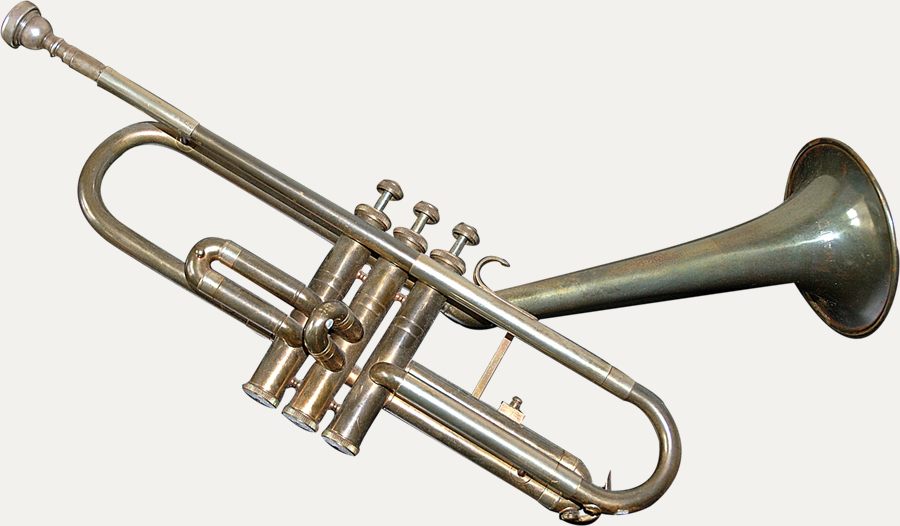
Trumpet, cornet and flugelhorn are all commonly pitched in Bb and use the same three-valve fingerings, which is why they are easy to confuse - but the bore shape of each is different enough to change both tone and feel.
- Trumpet: mostly cylindrical bore (constant diameter) for most of its tubing length. This gives it the brightest, most projecting, most brilliant tone of the three, suited to lead and solo brass parts.
- Cornet: mostly conical bore (gradually widening), plus more tightly wound tubing. This produces a warmer, more mellow, less piercing tone than trumpet, while still being agile - traditionally the lead voice in British-style brass bands.
- Flugelhorn: the most conical bore of the three, with a notably wider bell. It has the darkest, warmest, most mellow tone, is generally considered harder to play with precision in the upper register, and is typically used as a secondary or featured solo instrument (particularly in jazz ballads) rather than a primary lead voice.
For a player already on trumpet, fingerings transfer directly to cornet and flugelhorn - the adjustment is entirely about embouchure and airflow feel, not learning new fingerings. Because of that, many players treat cornet or flugelhorn as a second instrument rather than a starting point.