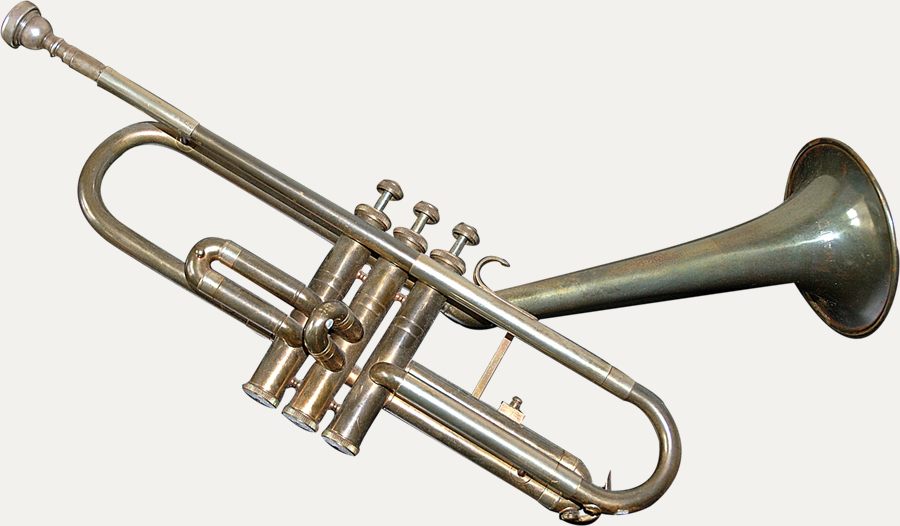
Trumpet
Bundy BTR-300
Price: 172 EUR – 172 EUR
Price history
Cheapest seen
Most expensive seen
Availability: 0/10 (Very rare)
The Bundy BTR-300 is a student Bb trumpet from one of America's oldest school-instrument brands, combining a red brass leadpipe and stainless steel pistons with the robust, no-frills build Bundy has been known for since the 1940s.
About the Bundy BTR-300
The BTR-300 is built with a .460-inch bore and a two-piece, 4.8-inch yellow brass bell paired with a red brass leadpipe of standard taper. The valve casings use nickel-plated yellow brass around stainless steel pistons, and the main tuning slide carries an extra brace along with nickel-silver slide receiver tubes to resist corrosion. A first-valve thumb saddle and adjustable third-valve finger ring are included for comfort, and the trumpet ships with a mouthpiece and an ABS hard-shell case. The overall design favors durability over refinement, consistent with Bundy's decades-long role as a dependable entry point into brass playing.
Where to buy
-
Reverb 172 EUR Best price View details
No platform selected – pick at least one above.
Some links below are affiliate links. We may earn a commission at no extra cost to you.
Source: https://reverb.com/item/42149047-bundy-btr-300-series-bb-trumpet-usa
Sound character of the Bundy BTR-300
The red brass leadpipe is credited by the maker with producing a warmer tone than a plain yellow brass pipe would, while the overall build favors tonal consistency - an even, predictable response - over tonal complexity, giving beginners a stable foundation to build technique on rather than a particularly colorful voice.
What owners of the Bundy BTR-300 say
Dedicated reviews of the current BTR-300 itself are hard to come by - retailer listings show essentially no accumulated ratings yet. What carries the brand's reputation is its long track record: among collectors and long-time players who compare the classic Bundy student line to its era's competitors, it's remembered as a notch above average, sitting close to Olds in build quality and generally outperforming the Conn Director. That historical goodwill is the main thing a buyer is trading on with a new BTR-300, more than any fresh wave of owner feedback on this specific model.
Playability & handling of the Bundy BTR-300
Bundy markets the valve action as smooth and responsive, which matters most for students who are still building consistent finger technique, and the adjustable third-valve ring helps the trumpet fit a wider range of hand sizes. The balanced weight is aimed at making longer practice sessions comfortable rather than tiring. Historically, players who compared the Bundy student line to contemporaries placed it close to Olds in quality and ahead of the Conn Director of the same era - a solid middle-of-the-pack standing among classic American school trumpets, though current owner feedback specific to the BTR-300 itself is sparse.
Recommended accessories & strings for the Bundy BTR-300
Regular valve oil for the stainless steel pistons and slide grease for the main tuning slide cover the essential maintenance. The included mouthpiece is a standard beginner size (commonly 7C on this model) that most students can use for the first several years, and the ABS hard-shell case is sufficient protection for school transport without needing an immediate upgrade.
Technical data for the Bundy BTR-300
| Bore | 0.460 inches |
|---|---|
| Bell | Two-piece yellow brass, 4.8 inches |
| Leadpipe | Red brass, standard taper |
| Valves | Stainless steel pistons in nickel-plated yellow brass casings |
| Tuning slide | Main tuning slide brace, nickel-silver slide receiver tubes for corrosion resistance |
| Key | Bb |
| Controls | First-valve thumb saddle, adjustable third-valve finger ring |
| Mouthpiece | Included (commonly a 7C-equivalent) |
| Case | ABS hard-shell case included |
Price history for the Bundy BTR-300
Cheapest seen: 172 EUR · Most expensive seen: 172 EUR
Cheapest seen
Most expensive seen
The history of the Bundy BTR-300
Bundy is the long-running student-instrument brand of Selmer USA (H&A Selmer), introduced in 1941 after the German occupation of France in 1940 cut off supply from the parent Selmer Paris workshop. Selmer bought the Harry Pedler & Sons brass factory in Elkhart, Indiana in 1958 to begin building Bundy instruments in-house, and fully absorbed the Bundy operation into Selmer by 1965. According to long-standing forum research among trumpet collectors, the classic Bundy trumpet design dates to 1962 and was credited to Vincent Bach, reflecting close design ties within the Selmer corporate family that also owned the Bach brand; a major mid-1980s revision by Bach eventually evolved into the Bach TR-300 line. Bundy today sits under Conn-Selmer.
About Bundy as a manufacturer
As Selmer's answer to wartime supply disruption, Bundy was built from the start to be a dependable, affordable American-made alternative rather than a scaled-down version of a premium instrument. Its decades of continuous production and its design lineage shared with the Bach brand within the same corporate family gave it a lasting reputation as one of the more trustworthy names in classic US school band instruments, a legacy the brand continues to lean on today under Conn-Selmer.
Related guides
- Silver-Plate vs. Lacquer Finish: Durability, Care and Tone Perception View details
- Buying a Trumpet Without Playing It First: What Can Go Wrong View details
- Trumpet vs. Cornet vs. Flugelhorn: How They Differ View details