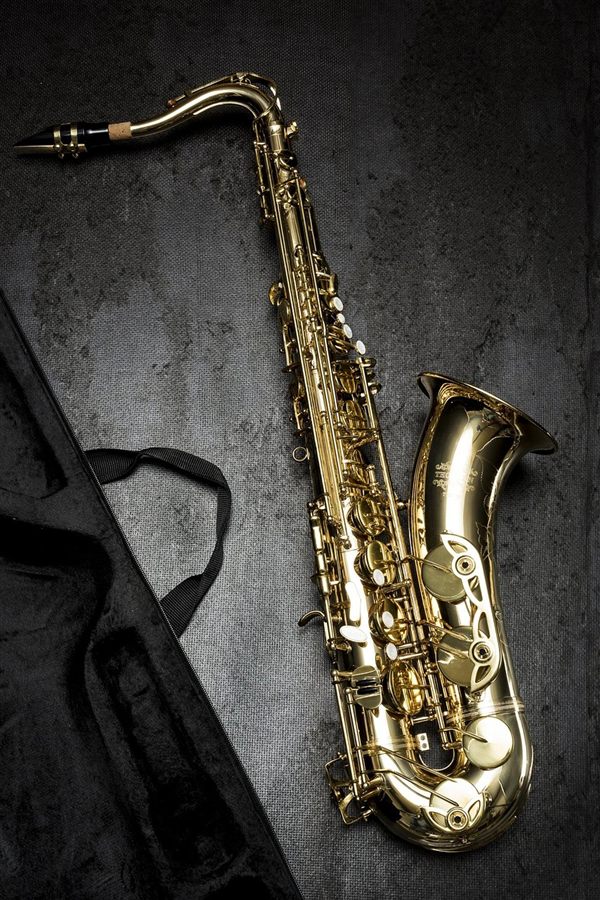
The short version: A used saxophone is a good deal when the body is straight, the pads seal reasonably well, and the price already accounts for whatever shop work is still needed. Looks and brand say little about how a horn plays. What matters is a structured check (dents, leaks, key action, corks, intonation), a trial play or an experienced companion, and a budget for a technician's checkup right after purchase.
Is buying used worth it?
Used saxophones commonly sell for 30 to 70 percent below comparable new instruments (rule of thumb). The catch is condition: a horn that needs a full repad can erase most of the savings. Used makes the most sense when you can judge condition yourself (or bring someone who can), when the model you want costs far more new, or when you are after something that is no longer made. If you are a first-time buyer with no help, a new student horn with a warranty is often the safer route. If you are still deciding between alto, tenor and soprano, see Alto, tenor or soprano: which saxophone to start on.
Used price ranges
Used prices vary with condition, included accessories and region. The overview below groups the classes roughly (as of Oct. 2026; sources disagree in places, so treat everything as a ballpark).
| Class | Typical examples | Price orientation |
|---|---|---|
| Student | Yamaha YAS/YTS-23, Selmer Prelude, similar student altos and tenors | Used roughly $500 to $800 for a Yamaha 23; student altos from other makers from about $650; some student models new under $1,300 |
| Intermediate | Yamaha 475 series, Selmer 500 series | Roughly $1,200 to $1,800 for the Yamaha 475 class; Selmer 500 series around $2,500 |
| Professional | Yamaha YAS-62 (alto), YTS-62 (tenor) | New about $2,500 (alto) and $2,800 (tenor); used YAS-62 sales have ranged from about $1,000 to $2,500, with an average near $1,600 in older sales data and about $1,800 in more recent listings |
| Vintage professional | Selmer Mark VI and contemporaries | Widely varying: figures from about $1,500 to well into five digits circulate, depending on serial range and condition; compare several recent listings |
Tenors cost noticeably more than altos in the same model line. Vintage horns are not automatic bargains: condition varies enormously, and relacquered or refurbished examples can play excellently. More on makers and eras is in Vintage saxophones and well-known makers. Brand-new horns advertised for under $200 are best avoided altogether.
The in-person checklist
Bring a bright flashlight, a tuner, several reeds in a strength you know, your own clean mouthpiece, a narrow strip of paper and, ideally, a player who knows saxophones. Work through the items in this order.
Body, dents and solder joints
- Dents: Small dents in the bell are often harmless. Dents on the neck, the bottom bow and near the octave pips are the problem: they disturb airflow and intonation and are hard to fix. Splits in the lacquer on the neck can signal an earlier "pull-down" or bend.
- Straight tube: Sight along the body. A bent tube warps tone holes and with them the seal.
- Posts and braces: Posts (the small pillars that hold the key rods) must sit firmly with no gap to the body. The braces connecting bell, body and key supports must not be separating. Gaps in the solder around tone holes are a defect a technician has to repair.
- Flashlight look: Shine a light into the bell and look from outside through the tone holes. You will see impact damage, traces of earlier dent work (vertical lines in the brass) and solder gaps.
- Finish and metal: Green deposits suggest poor storage. An unusually shiny finish may mean a refurbishment that covers damage. Relacquering is not a deal-breaker in itself, but it is worth asking about. Rust around rod screws can point to moisture damage.
Key mechanism and play
- Spring return: Press each key individually. It should spring back quickly and completely without sticking or feeling sluggish. Gummed-up mechanisms are common on horns that sat unplayed.
- Play in the rods: Gently wiggle key arms and rods sideways. Rods should be stiff with only minimal side-to-side movement. Loud rattling hints at worn bearings or missing felts.
- Linked keys: Test connected key chains, such as the low C, B and Bb group. If linked keys do not close together and evenly, the linkage is often out of adjustment after a drop or rough handling.
- Springs: Rusty, bent or weak springs show up as hesitant keys or keys that do not fully return. Replacing individual springs is usually inexpensive.
- Octave mechanism: The neck octave key must move freely and the small octave pip must be undamaged.
- Reach: Make sure your hands reach every key comfortably. That is part of the trial play rather than the mechanics.
Handle the horn gently: never force bent keys, and do not try to straighten anything yourself. Bent keys and posts are shop work.
Pads and sealing, tested with simple means
Pads are the wear parts that most affect response and intonation. You can spot most problems without tools.
- Visual check: Good pads are soft, even and free of deep grooves. Brittle, cracked, hardened or badly compressed pads and any mold are warning signs. Check that the resonators (the discs inside the pads) are firmly in place.
- Light check: Hold the horn up to a light source and look through the bell while gently closing keys. If light escapes around a pad's edge, it does not seal, and that note will sound weak, airy or not at all. It shows even better with a flashlight in a darkened room.
- Paper strip: Place a strip of paper under a closed pad and pull it out gently. A sealing pad grips the paper with even resistance all around; a leaking pad lets it slide free. Check the full circumference of the pad.
- Listening test: Play a slow chromatic scale from the lowest to the highest note. Low notes speak cleanly only with tight pads; weak or unreliable notes point to leaks.
- Keys that need force: A key you have to press hard to make it close is almost certainly leaking.
When a seller says the horn only "needs a quick adjustment," that often means a full repad costing hundreds of dollars, so price it in. Installing pads, bending keys and leveling tone holes are shop jobs, not home projects, because a wrong move can permanently damage the instrument.
Corks and felts
Cork and felt bumpers between keys set key height and keep the mechanism quiet. They wear down with time. Visibly missing, crumbling or compressed cork is a normal, low-cost fix during routine service. The neck cork matters most: it must not be porous or brittle, or the neck will not seal in the receiver.
Mouthpiece, neck and neck cork
- The mouthpiece must sit snugly on the neck cork without wobbling, and the cork must not be torn or crushed.
- The neck must not be bent, dented or loose. A neck that angles downward belongs in a shop.
- Does the neck belong to the body? Matching serial numbers on neck and body suggest an original pair, while a different finish on the neck may point to a replacement part.
- A mouthpiece that comes with the horn is often just a throw-in. How to choose a fitting mouthpiece and reed strength is covered in Choosing a mouthpiece and reed strength.
Testing intonation and response
Good intonation and easy response matter most for beginners because they help rather than hinder learning. Set the tuner to 440 Hz and begin with notes in the middle register, using your own mouthpiece and a fresh reed. Watch for these:
- Do all notes from low Bb to high F# (and high G if present) speak steadily?
- Are octaves clean, or do individual notes sit clearly out of tune?
- Does the horn respond at soft dynamics, or do low notes drop out?
- Does the pitch change a lot when you move the neck on the cork?
If you can, compare two or three instruments of the same class. If you do not play yet, bring an experienced player to test the horn for you.
Serial number and approximate year
The serial number is usually engraved on the body under the right thumb hook, and on some models also on the neck. Maker charts let you date a horn roughly. On the Selmer Mark VI, for example, production ran from 1954 to 1975 with numbers from 55201 to 233900, and the early five-digit numbers are especially sought after. For modern makers, the number is mostly a dating aid, not a quality verdict. Three warning signs matter:
- Missing or filed-off number: This is widely treated as a sign of a stolen instrument. Walk away.
- Different numbers on neck and body: The neck may have been replaced, which affects value and tuning.
- Overlaps: Model lines overlap, and the number alone says nothing about condition or value. Cross-check with details such as engraving and key design.
Hygiene: cleaning the horn and mouthpiece
A used saxophone arrives with someone else's saliva, moisture and, in the worst case, mold. Clean it before it goes in your mouth for the first time.
Mouthpiece
- Reed and ligature: Discard the supplied reed and use a new one. Check the ligature for residue.
- Basic cleaning: Wash the mouthpiece in lukewarm water with a little mild dish soap. A mouthpiece brush or soft toothbrush removes deposits without scratching the surface.
- No hot water: Hot water can warp or discolor a hard rubber mouthpiece.
- Mineral deposits: Stubborn buildup can be soaked for a few minutes in diluted household vinegar (roughly half water, half vinegar, body temperature), then rinsed thoroughly and brushed. Do not soak longer than about fifteen minutes.
- Disinfecting: After cleaning, a short soak in ordinary mouthwash or a mouthpiece disinfectant from a music store helps. Rinse with clean water and let it air dry.
Neck and body
- Neck: Clean the inside with a bottle brush or neck swab and mild soapy water, rinse with lukewarm water and dry it well. Keep the neck cork from staying wet.
- Body: Pull a swab through the body and bell several times. Absorb moisture from the pads with pad paper, placing it between pad and tone hole and pressing the key briefly. Never submerge the instrument.
- No harsh products: Skip bleach, solvents and strong sprays on the inside and on the pads. They can damage lacquer and pads. A persistent musty smell is a job for the technician's checkup.
- Case: Air it out and wipe it dry. A damp case encourages mold on pads.
Taking the horn apart yourself is unnecessary and risky. Small amounts of cork or rod grease are fine, but too much cork grease can dissolve the adhesive.
Buying online or checking in person?
Buying locally with a trial play is the lowest-risk route. Buying online carries notably more risk because photos and descriptions can hide exactly the details that decide how the horn plays.
What typically goes wrong with a sight-unseen purchase
- Few or mismatched photos: Listings with very few pictures, or pictures that do not match the description, are a red flag.
- Pads and corks are hard to judge from photos: Yet they decide whether the horn plays in tune and speaks evenly.
- Looks and condition are two different things: A cosmetically excellent horn can need a costly overhaul, and a worn one can be mechanically sound.
- Shipping damage: Damage to the bell and the neck receiver that was not visible on the outside of the carton is reported again and again. Pack the horn firmly and padded, ship neck and mouthpiece separately, insure the parcel and inspect it immediately on arrival.
- Too-cheap new horns: Very cheap new instruments from unknown sellers can be unplayable.
Cutting the risk
- Ask directly about pad condition, the last service and known repairs.
- Request close-ups of the keywork, neck cork, bell, serial number and the inside lit from within.
- Clarify in writing before buying whether returns are possible, for how long and who pays return shipping. Individual dealers and private sellers rarely offer meaningful return protection, while professional saxophone shops often include a setup or overhaul with the sale. Keep seller statements in writing. For legal questions, consult a consumer advice service.
- Have a technician look at the horn as soon as it arrives, while a return is still possible.
- With private sellers, verify the address and phone number first, and prefer a pickup you can inspect over paying upfront.
Companion and technician check
An experienced player catches flaws you would miss. Even safer is having a repair shop check the horn before you buy. Some shops will inspect a horn for a fee, and minor work is often billed by the hour (around $100 per hour at some shops, as of Oct. 2026; varies by shop, get a quote). It is money well spent when the instrument costs more than a few hundred dollars.
Negotiating
- Collect and price the flaws: Note every finding (leaking pads, missing cork, dents) and get an estimate from a shop beforehand.
- Subtract repair costs: Negotiate on the whole picture, not on gut feeling. A horn that needs an overhaul must be priced accordingly below a well-kept comparison model.
- Know the market: Compare similar models. Asking prices are a starting point, not a fixed value.
- Bundle accessories: Case, strap, mouthpiece and ligature are bargaining chips.
- Stay calm: If a seller pushes ("other buyers are interested"), that is rarely a good sign.
After the purchase: technician checkup and costs
Plan a checkup regardless of your first impression. It shows what is coming up in the next year and brings the horn to an even, playable state. A technician checks and adjusts pads, replaces springs, corks and felts, frees up the mechanism and fixes small leaks. Typical shop prices (as of Oct. 2026; varies by shop, get a quote):
| Work | Ballpark |
|---|---|
| Play condition service (oil, regulate, up to two pads) | about $150 (alto) and $165 (tenor) |
| Professional-model setup | about $480 |
| Full repad (all pads, corks, regulation) | about $565 (alto) and $720 (tenor) |
| Student-model overhaul including pads | about $995 |
| Full overhaul with relacquering, or professional-model overhaul | about $1,350 to $1,500 |
| Neck cork, single spring | about $25, about $9 to $12 per spring |
| Dent work, solder repairs, custom work | by estimate, varies by shop, get a quote |
Details on scope and sequence are in Saxophone overhaul: costs and process. After that, regular care keeps costs down: swab after every session, use pad paper when needed and schedule a yearly checkup.
Common mistakes when buying used
- Judging by looks or brand: A pretty saxophone can leak, a worn one can seal perfectly. Brand and vintage mystique do not replace a check.
- Skipping the trial play: Without listening, intonation and response are guesswork.
- Believing "needs a quick adjustment": It is often a full repad.
- No repair budget: Spending the whole budget on the purchase leaves nothing for service and corks.
- Underrating neck dents: They affect intonation and airflow more than dents in the bell.
- Ignoring the serial number: Missing or filed numbers point to theft, mismatched neck numbers to replacement parts.
- Treating relacquered as bad: That is a myth. The quality of the work and the condition underneath decide.
- Forgetting hygiene: Clean the mouthpiece and neck and replace the reed before first use.
- Skimping on shipping: Poor packing can cause bell or receiver damage nobody sees from outside.
Quick questions and answers
How much repair budget should I plan? At least the price of a play condition service; for older horns without a known maintenance history, plan for a repad or overhaul.
Can I buy a saxophone if I do not play yet? Yes, but only with an experienced companion or a technician check, especially as a beginner.
Which flaws rule a horn out? A bent tube, deep dents on the bow, separated braces or posts, a missing serial number, and a price that ignores repairs.
Used or new for a beginner? If you cannot judge condition, a new student model with a warranty is often the calmer choice.