Saxophone
Yanagisawa T-WO2
No current price available
Availability: 0/10 (Very rare)
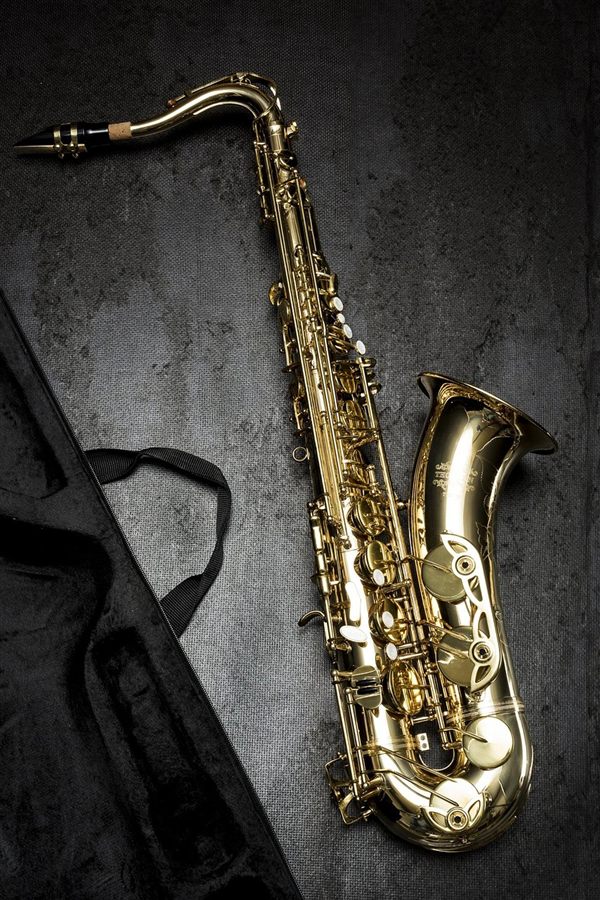
A professional bronze-body tenor saxophone from Yanagisawa's WO series, paired with an individually hand-engraved bell and refined, lightweight keywork.
About the Yanagisawa T-WO2
The T-WO2 is the bronze counterpart to the brass T-WO1 within Yanagisawa's professional WO line - body, bow, bell and neck are all made from phosphor bronze rather than standard yellow brass, a material choice the company has used since introducing its first bronze saxophones in 1992. Like the other WO1/WO2 professional models, it uses a single-post body construction with an added palm-key plate and a neck plate bearing the Yanagisawa logo, adding just enough mass for a richer tone while staying lighter than the ribbed-construction Elite models further up the range. Each bell carries its own hand-engraved pattern, giving every instrument a slightly individual, artisanal look rather than a machine-stamped design. The keywork itself runs on a fluororesin-coated octave mechanism meant to stay smooth rather than sticky over time, combined with waterproof pads, pointed pivot screws and blue steel springs.
Where to buy
Unfortunately we can't currently find any offers for this instrument. Check back regularly - we update our listings several times a day.
Sound character of the Yanagisawa T-WO2
The phosphor-bronze body gives the T-WO2 a warmer, noticeably darker and more complex tone than its brass sibling the T-WO1, with greater depth and tonal color - bronze's higher density and stiffness change how the tube resonates compared to standard yellow brass. The WO series' tighter bow bore, borrowed from the earlier 800-series specification, concentrates tonal core and projection, while the deliberately widened bell throat keeps the lowest notes resonating freely rather than choking off the low end that a narrower bore could otherwise constrain.
What owners of the Yanagisawa T-WO2 say
Forum discussion around this model runs consistently enthusiastic, often describing the instrument as an exceptional horn that lets a player's expression come through in any setting, with action rated as unmatched - snappy, tonally rich and responsive across the board. The bronze body in particular keeps drawing praise for a warm, solid feel and strong projection, occasionally paired with a slight 'scratch' in the tone that some players read as added character rather than a flaw. Taken together, the recurring themes are responsive mechanics, precise intonation, and a tone with more body than the brass T-WO1 that sits beside it in the same series.
Playability & handling of the Yanagisawa T-WO2
Across forum discussions, the keywork comes up repeatedly as light and highly responsive, with the left-hand pinky cluster in particular singled out as fluid and efficient under the fingers - a detail that matters on a horn built for fast, demanding passages. The connected C#/Bb table-key linkage is credited with speeding up tricky fingerings rather than just looking elegant. Intonation across the range, including the helper fingerings used for trills, is consistently described as excellent, and response from the bottom to the top of the range is reported as even and easy rather than requiring extra breath support in any one register.
Recommended accessories & strings for the Yanagisawa T-WO2
The saxophone ships with a Yanagisawa ebonite mouthpiece, a padded case with backpack straps and an outer pocket, and a neck strap - but notably without a body or neck swab, which is worth adding separately for daily cleaning. General buying-guide advice applies here too: mouthpiece material and tip opening have a major influence on tone, so it pays to try a few before settling on one, and reed squeaks are most often traced back to a reed that is too soft, too old, or simply seated incorrectly - rotating between two or three reeds extends their working life. Given the added weight of a bronze tenor body, a shoulder or back-support strap is a sensible addition alongside a reliable tuner for intonation work.
Technical data for the Yanagisawa T-WO2
| Body, bow, bell and neck material | Phosphor bronze |
|---|---|
| Key material | Brass, clear lacquer finish |
| Pitch | Bb, low Bb to high F# |
| Construction | Single-post body (professional WO1/WO2 tier), palm-key plate and neck plate |
| Bell | Individually hand-engraved pattern |
| Octave mechanism | Fluororesin-coated for smooth action |
| Pads | Waterproof pads with plastic resonators |
| Included accessories | Yanagisawa ebonite mouthpiece, padded case with backpack straps, neck strap (no body/neck swab) |
| Controls | No electronic controls - tone and dynamics are shaped entirely through breath support, embouchure and the single-post Boehm-derived keywork (octave key, palm keys, C#/Bb table-key linkage, auxiliary F mechanism) |
The history of the Yanagisawa T-WO2
The WO series launched in 2014 as Yanagisawa's first ground-up redesign of its alto line in more than twenty years, directly succeeding the 900-series bronze models (the A-902 alto from 2002 and the T-902 tenor that followed in 2003). The redesign focused mainly on the bow and bell, reverting to the tighter bore specification of the earlier 800 series to restore tonal core and depth, while widening the bell throat to let the lowest notes still resonate freely. Yanagisawa also switched brass suppliers for the yellow-brass components used across the line as part of that redesign. Within the WO series, the T-WO2 sits as the bronze professional model alongside the brass T-WO1, one tier below the ribbed-construction Elite models (WO10 and above).
About Yanagisawa as a manufacturer
Yanagisawa's story began in 1894, when Tokutaro Yanagisawa started out repairing imported woodwinds for Japanese military band musicians - a repair business that grew into Japan's first woodwind instrument factory. His son Takanobu built the company's first saxophone prototype in 1951, marking its entry into saxophone manufacturing specifically. From there, Yanagisawa built a reputation on material experimentation that few competitors matched: the first solid-silver saxophone in 1972, and phosphor-bronze models starting in 1992, alongside extensive options to mix materials across individual components of a single instrument. After years of exporting under other distributors' brand names through the late 1960s, the company established its own brand identity in 1978. Its soprano saxophone designs in particular are regarded as influential across the wider industry, placing Yanagisawa in the same conversation as Selmer Paris and Yamaha among leading manufacturers.
Related guides
 Buying a Used Saxophone: What to Check
View details
Alto, Tenor, Soprano: Which Saxophone to Start On
View details
Vintage Saxophones From Major Makers: What Collectors Look For
View details
Matching Mouthpiece and Reed: How Tip Opening and Reed Strength Work Together
View details
Saxophone Overhaul: What a Full Pad and Cork Replacement Actually Involves
View details
Similar instruments
Selmer AS600
Yamaha YTS-52
Yamaha YAS-52
Yamaha YAS-26
Yamaha YTS-62II
Eastman ETS652 52nd Street