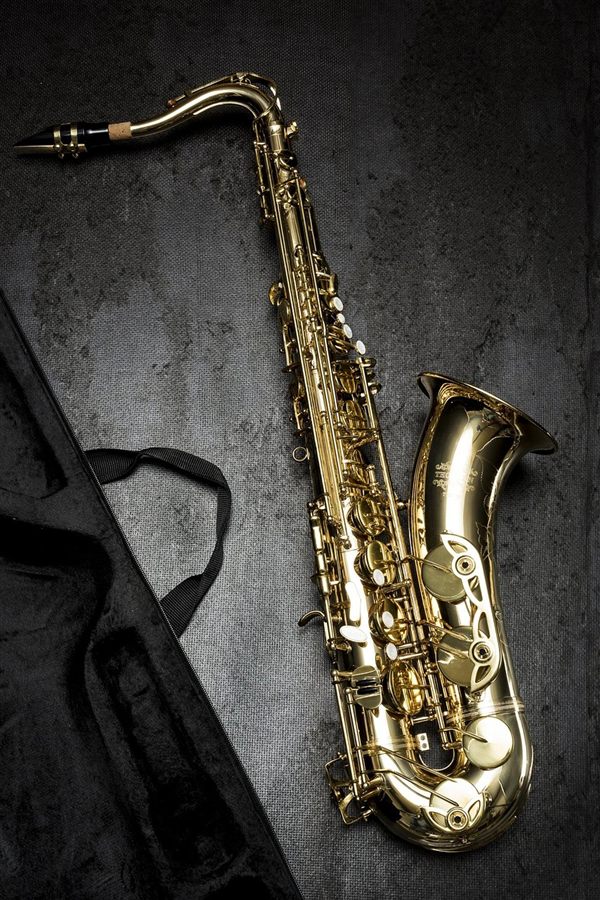
Short answer: A saxophone overhaul replaces everything that wears out: pads, corks, felts and, where needed, springs, followed by cleaning, regulation and a leak check. In the US a basic repad runs from roughly $480 on a soprano to over $800 on a baritone, and a full mechanical overhaul typically lands between about $1,000 and $2,000 (as of Oct. 2026). It pays off when the horn is sound at its core and the bill is sensible next to its value. Daily care and a yearly checkup push the next overhaul back by years.
What an overhaul covers
A saxophone has roughly 20 to 25 keys, and each one closes a tone hole with a pad (a soft disc with a leather or synthetic skin). Notes only speak reliably when every closed key seals airtight. An overhaul restores that for the whole instrument. Typical scope:
- Inspection and disassembly: the horn is taken apart completely and checked.
- Cleaning: body, rods and keywork are cleaned inside and out and old grease is removed.
- All pads replaced: usually with resonators (small discs in the pad center that can shape the tone). Upgraded resonators often cost extra.
- Corks and felts replaced: they cushion key motion and set how far each key opens, including the cork on the neck tenon.
- Springs: weak or broken springs are replaced.
- Tone holes: the rims are checked and, if uneven, leveled so pads seat evenly.
- Keywork: bent parts are checked and straightened, pivots are lubricated.
- Regulation and testing: key heights and linkages are adjusted, then the horn gets a leak check and a play test.
Some shops fold small dents and minor soldering into the job. Larger damage, corrosion and refinishing cost extra.
Partial service versus complete
Not every horn needs everything. In practice:
| Service | What happens | Makes sense when |
|---|---|---|
| Play-condition / annual service | Inspect, oil, adjust, replace a few pads | Horn is in good shape and played regularly |
| Individual pads | Only the leaking spots are replaced | A few leaks, remaining pads still soft and even |
| Full repad | All pads, tenon and key corks, regulation | Several pads hard or uneven, leaks keep moving |
| Full overhaul | Repad plus disassembly, cleaning, springs, tone holes, keywork, often refinishing | Long neglected, loose mechanism, used purchase with unknown history |
Be careful when comparing quotes: what shops call a repad or an overhaul is not standardized. Some overhauls include cleaning, buffing and relacquering, others do not. Ask what is in the price.
Process and turnaround
You drop off or ship the horn, the shop inspects it and gives an estimate. After approval it is disassembled, cleaned, repadded and regulated, then leak-tested and play-tested. Some shops offer a warranty on the work, often a year.
Turnaround varies widely. Some shops report one to several weeks, and busy periods such as the start of the school year add delays. Plan well ahead of auditions and concerts, or arrange a loaner. If you ship, pack the body and neck separately in the case with plenty of padding and use insured shipping.
Costs in the US
Prices depend on instrument type, condition and shop. Guideline figures for the US (USD, as of Oct. 2026):
| Saxophone | Play-condition service | Full repad | Full overhaul incl. refinish |
|---|---|---|---|
| Soprano | about $140 | about $480 | about $1,225 |
| Alto | about $150 | about $565 | about $1,350 |
| Tenor | about $165 | about $720 | about $1,450 |
| Baritone | about $175 | about $812 | about $1,575 |
Other shops price differently. A mechanical overhaul without refinishing on a pro-level soprano, alto or tenor is quoted around $1,500 at some shops, baritone around $1,900 and bass around $2,000, and complex models start higher. A student or intermediate alto or tenor overhaul is often quoted near $1,000, sometimes with the pads included and sometimes billed separately. A horn that was recently repadded may only need a setup at roughly $480 to $575. Replacing a single pad usually costs about $30 to $40, and leveling a tone hole is a small add-on, around $65 at one shop.
Reports of a full repad on an alto spread from about $300 to $800. The range is wide because of materials, shop and what is included. Get a written estimate with itemized work.
When an overhaul is worth it
What counts is the cost relative to the value of the horn afterwards.
- Professional or sought-after horns: almost always worth it. An overhauled pro or vintage saxophone is playable immediately and easier to sell.
- Solid student or intermediate horns from established makers: worth it if purchase price plus overhaul stays below a comparable horn that is already serviced.
- Very cheap unbranded horns: often not worth it. When the overhaul costs as much as a new entry-level horn, it rarely pays, particularly because poorly built keywork is hard to regulate cleanly.
- Casual players: with light use and good care, pads can last very long, and partial service may be enough.
When buying used, always add purchase price and overhaul together. "Needs an overhaul" is a foreseeable expense, not a defect in the horn itself, but it belongs in the price. See buying a used saxophone. For vintage horns it also helps to know the well-known makers and eras.
How to tell you need one
Pads are wear parts. Lifespan depends on how often you play, pad quality and care. Estimates range from a few years to more than a decade, with heavy players at the low end. Signs:
- Certain notes respond poorly or sound dull, stuffy or thin, especially low notes or across register breaks.
- You are adjusting your embouchure to coax notes out.
- Keys only seal with heavy finger pressure, or seal unreliably.
- Pads look hard, cracked, deformed, discolored, unevenly indented or feel sticky.
- The keywork is noisy, sluggish or has play.
- More than ten years have passed since the last overhaul, even if it still plays.
Octave pads, the middle B-flat, side keys, the G-sharp key and low notes are common trouble spots. A technician finds leaks with a leak light. You can sense mild leaks by playing passages and testing single fingerings, but diagnosis belongs in the shop. For checks when buying, see buying a used saxophone.
Maintenance schedule and annual checkup
As a rule of thumb, have a professional check the horn yearly, more often with heavy playing. It costs far less than an overhaul and catches small leaks before they grow. A practical schedule:
- After every session: dry and clean (see below).
- Weekly to monthly: gently clean rods and gaps between keys with a polishing cloth, without pressing on the keywork.
- About twice a year: brush the neck interior with lukewarm water and mild soap, keeping the cork dry.
- Yearly: professional checkup.
Use oil sparingly on moving parts and wipe off the excess; apply cork grease thinly. Too much grease makes the neck slip and attracts dirt.
Everyday care
After playing
Moisture is the pads' worst enemy. After every session:
- Remove the reed and mouthpiece.
- Pull a weighted swab through the body several times and a smaller swab through the neck.
- Slip pad paper briefly between pad and tone hole, close the key gently and let it soak up moisture. A pad saver in the body helps but does not replace swabbing.
- Wipe the exterior with a soft, lint-free cloth. Fingerprints and sweat attack lacquer and plating.
- Never put the horn in the case damp.
At home a stand beats the case, since in the case the keys sit under slight pressure. Pull the swab through without force: a jammed swab can bend keywork.
Keeping the mouthpiece hygienic
- Rinse the mouthpiece with lukewarm water after playing and clean it with mild soap and a soft brush when needed.
- No hot water and no dishwasher: hard rubber can discolor and warp.
- Dry it thoroughly before storing.
- Keep the ligature clean and dry and do not overtighten the screws.
- Food residue and unwashed hands promote mold and odor, so rinse your mouth before playing.
Looking after reeds
- After playing, rinse or wipe the reed, do not let it dry out completely, and store it in a reed case or guard.
- Rotate several reeds so each can recover. Depending on playing time, a reed often lasts only a few weeks.
- Break in new reeds gradually.
- Replace moldy, cracked or permanently warped reeds. More on choosing: choosing mouthpiece and reed strength.
Lacquer wear and relacquering
Cosmetic only, or does it change the tone?
Lacquer is a thin protective layer on the brass. Many horns are worn bare exactly where hands and sweat contact them most. That signals heavy use, but by itself it says nothing about pad condition, mechanics or intonation.
Whether lacquer audibly changes the sound is disputed. Most players consider any effect small or unprovable. Next to embouchure, reed, mouthpiece, neck and bore it plays a minor role. Bare brass protects less against sweat: springs, screws and rollers can corrode and the surface needs more care.
Relacquering: cost, value, risks
- Tone risk: If the old lacquer is removed too aggressively, metal can be thinned and solder joints or tone holes can suffer. Done well, a relacquered horn sounds just as good, not better.
- Value: For vintage horns, collectors and buyers generally prefer honest original lacquer. A relacquer often cuts resale value significantly.
- Cost: Relacquering alone runs in the hundreds of dollars, with figures mentioned from about $200 to $350 for an alto up to roughly $600 for a baritone, and higher with extra repairs. These are loose figures, and a full overhaul that includes refinishing is priced as shown above. Varies by shop, get a quote.
- Worn original lacquer is not a defect: For buyers it is mostly an honest sign of how much the horn was played. Rejecting an otherwise well-maintained saxophone because of it is rarely justified.
Care protects the finish: a soft lint-free cloth is usually enough. On old lacquer avoid hot liquids and abrasives, and on bare brass or silver avoid metal polish unless you know how the finish reacts.
Common mistakes
- Comparing only the lowest price without clarifying what is included (resonators, springs, tone holes, refinish, warranty).
- Not getting a written estimate and learning about extra charges at pickup.
- Packing the horn damp or skipping the swab.
- Using too much oil or cork grease, which binds dust and soils pads.
- Fixing pads, keys or solder joints yourself: that is shop work, even slight bends ruin sealing.
- Shipping the horn without padding.
- Ignoring overhaul cost relative to value on cheap horns.
- Expecting relacquering to improve the sound.
Frequently asked questions
Can I replace pads myself?
It is not recommended. Seating, height and the coordination of keys require tools and experience, and small errors cause leaks. You handle swabbing, cleaning and watching for problems, the rest belongs in the shop.
Will the horn sound better or louder afterward?
It will respond more easily and evenly because nothing leaks. A poor horn does not turn good, but a good horn is fully realized.
Why does an overhaul cost more than single pads?
Because everything is disassembled, cleaned, replaced and regulated again. Most of the effort goes into adjusting about two dozen keys.
Should I overhaul a used horn right after buying it?
Not necessarily. A leak check shows whether partial service is enough. With unknown history and clear signs, factor the overhaul into the purchase decision right away.