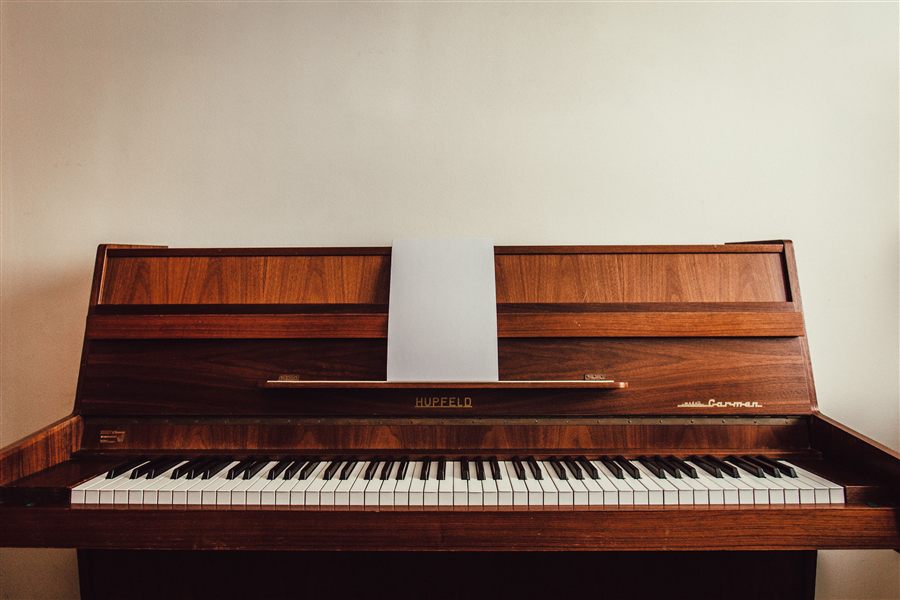
Upright Piano
Danemann Upright Piano (Walnut)
No current price available
Price history
Cheapest seen
Most expensive seen
Availability: 0/10 (Very rare)
Danemann is a historic British piano brand founded in 1893 in Islington, London, renowned for exceptionally durable uprights that became a fixture in schools and institutions, with a scale design rooted in Grotrian-Steinweg engineering and a tone that later generations of dealers describe as warm and well-balanced.
About the Danemann Upright Piano (Walnut)
Danemann uprights typically measure around 116cm (45.7") tall, 141cm (55.5") wide and 60cm (23.6") deep across 88 keys, though exact dimensions vary across the company's nearly 90-year production run from 1893 to 1980. Actions were historically built and supplied by Renner, Schwander and British Piano Actions. The brand's distinctive scale design traces back to engineering developed at Grotrian-Steinweg of Braunschweig, Germany, which Danemann refined over time until it was fully incorporated into its own instruments. Across its history, Danemann produced everything from small and large uprights to grands ranging from 5'2" up to 9'6" concert grands.
Where to buy
Unfortunately we can't currently find any offers for this instrument. Check back regularly - we update our listings several times a day.
Sound character of the Danemann Upright Piano (Walnut)
A tone described historically as clear and bright with responsive touch, while more recent dealer assessments of used examples lean toward warm, mellow and well-balanced with a solid bass end - variation likely tied to the wide range of production years spanned by the brand.
What owners of the Danemann Upright Piano (Walnut) say
Dealer assessments of used Danemann uprights are consistently positive, with build quality and long-term durability as the most frequently cited strengths - the same qualities that made the brand a school favorite decades ago still drive demand on the used market today. A Piano World forum discussion specifically about valuing a Danemann school upright reflects ongoing interest in the brand's resale value, confirming its reputation has held up well over time. No significant criticisms turned up in the sources checked, beyond the expected caveats of buying any older used piano.
Playability & handling of the Danemann Upright Piano (Walnut)
Danemann built its reputation on sheer indestructibility, which made the brand especially popular for use in schools - an instrument there needs to withstand heavy, repeated use across many different players and keep performing reliably for years. That same durability attracted prestigious institutional buyers: British embassies, the P&O shipping line and numerous educational institutions all bought Danemann pianos, and the company exported tropicalized versions built to withstand the climates of India and Africa. The brand's standing reached a high point when Danemann supplied the Royal Festival Hall for its 1951 opening, and in 1963 Harrods' own piano buyer specifically commissioned Danemann to build what was described as the best upright in the world. Historical accounts describe the tone as clear and bright with a responsive touch, while dealers selling used examples today more often describe a warm, mellow and well-balanced sound with a good bass end - a difference that likely reflects the wide range of production years and models rather than a contradiction.
Recommended accessories & strings for the Danemann Upright Piano (Walnut)
Since most Danemann pianos on the market today are older or used instruments spanning production from before the war through to 1980 (or the smaller 1982-1994 Welsh production run), regular professional tuning and, depending on condition, action or soundboard restoration are worth budgeting for on an older example.
Technical data for the Danemann Upright Piano (Walnut)
| Height / width / depth | Approx. 116cm / 141cm / 60cm (varies by model and year) |
|---|---|
| Keys | 88 |
| Action | Historically Renner, Schwander, British Piano Actions |
| Scale design | Rooted in Grotrian-Steinweg engineering |
| Production | 1893-1980 (London); ~350 units 1982-1994 (Cardiff) |
| Range historically produced | Small/large uprights through 5'2"-9'6" grands |
Price history for the Danemann Upright Piano (Walnut)
Cheapest seen: – · Most expensive seen: –
Cheapest seen
Most expensive seen
The history of the Danemann Upright Piano (Walnut)
Danemann, a long-established British piano brand, built dependable mid-tier instruments with elegant furniture finishes like this walnut upright.
About Danemann as a manufacturer
W. Danemann & Company was founded in 1893 by William Danemann, a German-born furniture designer and architect who had trained under the renowned British piano maker John Brinsmead, setting up shop in Islington, London. Over nearly 90 years of production until 1980, Danemann grew into one of Britain's best-known and most respected piano manufacturers, with a post-war shift toward very high-quality instruments built from the best materials available rather than chasing mass-market volume. Broadwood Pianos bought the business and factory in 1982, and just three years later Gardner Pianos of Cardiff acquired it, producing roughly 350 Danemann pianos in Wales before production ceased entirely in 1994. The brand was revived in 2017 through a joint venture with Broughton Pianos, restoring hope for a historic name that had gone quiet for over two decades.