Saxophone
Selmer Bundy II
Price: 251 EUR – 350 EUR
Price history
Cheapest seen
Most expensive seen
Availability: 4/10 (Common)
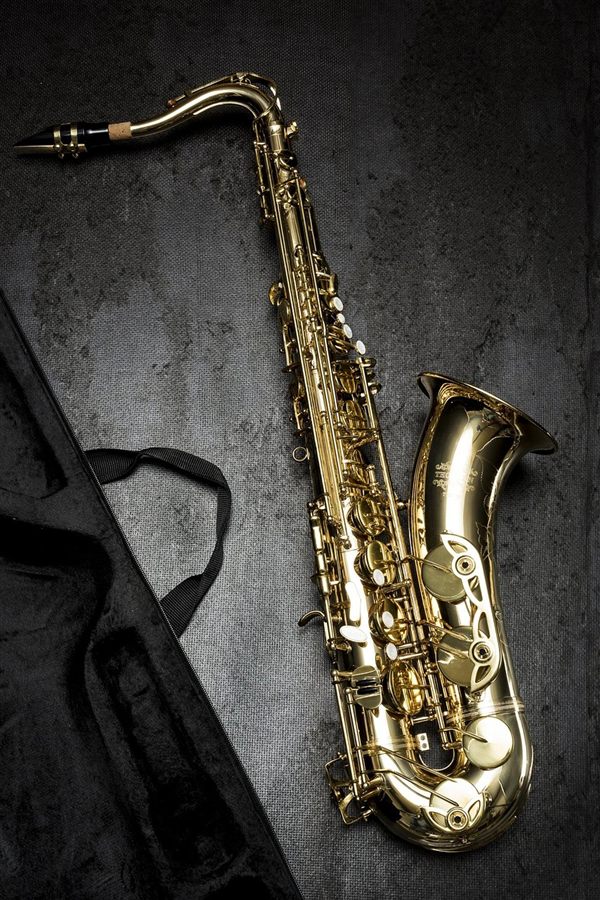
The Selmer Bundy II is a lacquered brass student alto saxophone with silver-plated keys that spent decades as the default school-band horn in the US, built on a modernized mechanism that replaced the original Bundy's Buescher-derived design, though it's since been widely overtaken by Yamaha's student line.
About the Selmer Bundy II
Built from lacquered brass with silver-plated keys, a medium bore and closed tone holes, the Bundy II didn't enter production until around 1978-79, replacing the original Bundy - which had in fact been built by the Buescher company and shared its body design with the historic Buescher Truetone saxophones patented back in 1914. The II generation reworked the mechanism, specifically reshaping and relocating the left-hand pinky table keys with a more modern curved high-E key, among other minor changes. Collectors and long-time players note an odd twist: despite being the newer, more modernized design, the Bundy II is generally regarded as built to a less sturdy standard than the older Bundy I. Sales still jumped 38% in the Bundy II's first year on the market. It ships with a hard case, neck strap, mouthpiece, ligature, reed and cleaning cloth.
Where to buy
Platforms
Price
–
-
Reverb Selmer Bundy-II Alto Saxophone, USA, with case/neck/MP 251 EUR Best price View details
-
Reverb Selmer Bundy-II Alto Saxophone, USA, with sax, neck, mouthpiece/ligature, case, reeds 279 EUR View details
-
Reverb Selmer Bundy II Alto Saxophone – Used 316 EUR View details
-
eBay 80's SELMER BUNDY II ALT / ALTO SAX / SAXOPHONE - made in USA 350 EUR View details
-
eBay 80's SELMER BUNDY II ALT / ALTO SAX / SAXOPHONE - made in USA 350 EUR View details
No platform selected – pick at least one above.
Some links below are affiliate links. We may earn a commission at no extra cost to you.
Source: https://reverb.com/item/92806195-selmer-bundy-ii-alto-saxophone-student-sax-with-hardshell-case
Sound character of the Selmer Bundy II
Properly set up, the Bundy II produces a warm, full tone adequate for student performance and practice, though opinion divides on how lively that tone feels - some players find it noticeably flat and uninspired, while others report a genuinely acceptable, evenly-scaled sound once leaks at the neck tenon are addressed.
What owners of the Selmer Bundy II say
Sentiment splits along a predictable line between blunt criticism and grudging respect. The harshest voices call the construction crude and the tone lifeless, while more measured players insist that a properly maintained example - particularly one with a sealed neck tenon - plays acceptably well with a decent scale. What nobody disputes is its historical role: for many years it was likely the single most common student saxophone in the US, the default school-band workhorse before Yamaha's YAS-23 line took over that position. At a typical used price of around $150 for a working example, it's still framed as a reasonable entry point for a budget-conscious beginner, just not a first choice when a comparable Yamaha is available.
Playability & handling of the Selmer Bundy II
Forum discussion among experienced players paints an unvarnished picture: the instrument is called crude with a very basic design and low manufacturing standards, but also genuinely tough, built to survive the demands of a school band program for years. Tone quality draws the harshest criticism - one player calls it flat and lifeless - though another with more direct experience pushes back, noting that a well-serviced example with a properly sealed neck tenon produces a good scale and a genuinely acceptable sound. Ergonomics are consistently described as nowhere near a professional horn, which makes fast passages noticeably harder for an advancing student. The overall verdict that emerges is practical rather than flattering: fine for a beginner learning fundamentals on a tight budget, but clearly a step down from what Yamaha's student line offers today.
Recommended accessories & strings for the Selmer Bundy II
A mouthpiece, ligature, reed, neck strap, cleaning cloth and hard case come included, covering everything needed for lessons to start. When buying used, checking the neck tenon seal is specifically worth doing, since forum veterans point to it as the single detail that makes the biggest difference in getting an acceptable sound from this instrument; a general pad and cork check on an older unit is equally worthwhile.
Technical data for the Selmer Bundy II
| Body | Brass, lacquer finish |
|---|---|
| Keys | Silver-plated |
| Bore | Medium |
| Tone holes | Closed |
| Lineage | Successor to the original Buescher-built Bundy (~1978-79) |
| Included | Hard case, neck strap, mouthpiece, ligature, reed, cleaning cloth |
Price history for the Selmer Bundy II
Cheapest seen: 251 EUR · Most expensive seen: 350 EUR
Cheapest seen
Most expensive seen
The history of the Selmer Bundy II
Part of Selmer's Bundy student instrument line, the Bundy II became a common first alto saxophone for school band programs valued for its durability.
About Selmer as a manufacturer
The Bundy name traces back to George M. Bundy, who founded the American Selmer company in Elkhart, Indiana in 1927; the Bundy Band Instrument Corporation itself was created in 1958 in his honor and merged into the parent company in 1965, eventually becoming part of Conn-Selmer in 2002. What's specific to the saxophone line: the very first Bundy saxophones were actually manufactured by the Buescher company, sharing a body design with the historic Buescher Truetone line patented in 1914. The Bundy II, arriving around 1978-79, replaced that Buescher-derived design with a modernized mechanism of its own - a reminder that "Bundy" covers two genuinely different saxophone designs under one brand name, not a single horn with minor running changes.
Related guides
 Buying a Used Saxophone: What to Check
View details
Alto, Tenor, Soprano: Which Saxophone to Start On
View details
Vintage Saxophones From Major Makers: What Collectors Look For
View details
Matching Mouthpiece and Reed: How Tip Opening and Reed Strength Work Together
View details
Saxophone Overhaul: What a Full Pad and Cork Replacement Actually Involves
View details