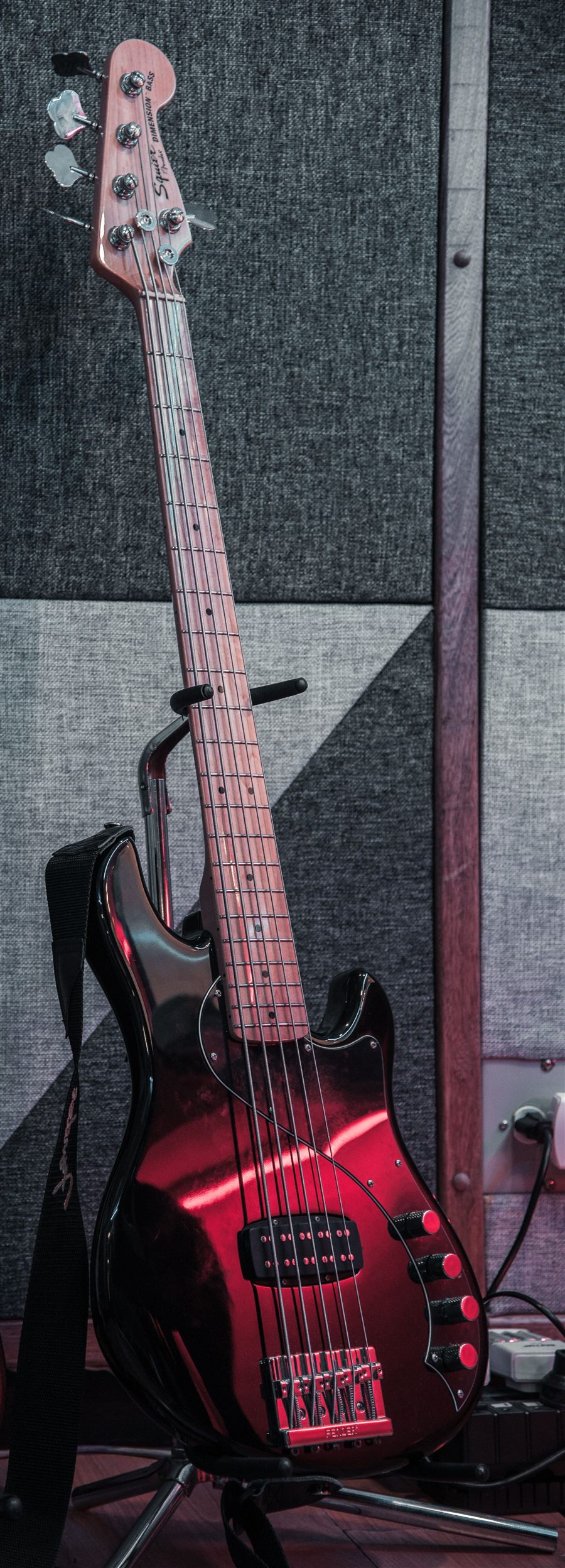
A used bass is a good buy when the neck, frets and electronics are sound and the price already allows for any work it needs. The key checks are a straight neck with no twist, a truss rod that still has room to move, limited fret wear (especially under the thick strings), no repair marks around the headstock and neck joint, and controls and jack that stay quiet when you play through an amp. Cosmetic scratches matter far less.
Where to buy a used bass
Dealers with a used section
Music stores usually check their used stock and often have it set up already. Prices tend to run a little higher, but you get to play it in the shop, you get after-sale support, and you have someone to go back to if something is wrong. For beginners this is the simplest route.
Classifieds and online marketplaces
This is where the selection is biggest and the prices often lowest, but the inspection risk is yours. Look for local listings so you can see and play the bass in person. Do not go alone: bring someone who plays bass or guitar, and ask for a simple written receipt naming the model and the claims the seller made.
Private sales through friends and local bands
Here you can often learn the instrument's history. Ask why it is for sale, whether the seller is the first owner, and whether anything has been modded or repaired. Honest sellers answer openly.
Buying by mail
Without a chance to play it, you skip the most important test. It makes more sense with sellers who offer a clear return window. More on this below.
Price orientation in the US
These figures are rough guides (as of Oct. 2026) and vary widely by model, condition and region.
- Used Squier Classic Vibe basses mostly list between about $275 and $450 (as of Oct. 2026): a '60s Precision from around $275, a '70s Jazz Bass from around $340, and some listings on other marketplaces reach about $490.
- For used mid-range and higher-end American-made basses and vintage instruments there is no reliable single range, so compare several current listings of the same model.
Budget for follow-up costs too. The real price of a used bass is the purchase price plus the work needed to make it reliable and playable.
| Shop work | Rough price (as of Oct. 2026) |
|---|---|
| Setup, 4-string bass | about $150 to $275, depending on shop and level of work |
| Setup, 5-string bass | about $175 to $300 |
| Fret level, crown and polish | about $80 to $240, depending on region and what is included |
| Complete refret | about $300 to $500, with stainless steel at the upper end or above |
| New nut | about $80 (plastic) to $150 (bone or synthetic) |
| Replace output jack | from about $30 |
| Replace tuners | from about $100 |
For truss rod work, neck or headstock repairs and bigger electronics jobs: get a quote, because prices vary by shop too much for a reliable range.
Neck checklist
The neck is the most important part because it is the hardest to repair. On bolt-on basses a damaged neck can be replaced, on neck-through basses it cannot.
Twist, relief and truss rod range
Hold the bass at eye level and sight along the neck from the headstock end. It should run evenly, without waves and without twist (a corkscrew shape). A twisted neck causes uneven action, buzzing and dead spots and is often uneconomical to correct, so it is a deal-breaker.
Check that the truss rod still has range left. If it is already turned all the way, no longer has any effect, or is seized or stripped, the neck may be beyond adjustment. As a buyer, never force it. Ask the seller whether the bass is still adjustable, and where you can do it with the right tool, see that the rod responds in both directions.
Frets and wear
Run a finger along the fret ends and look at the frets under a raking light. On well-played basses, grooves or dents under the thick strings are typical because the strings act harder there. Light marks are normal. Deep notches, flat spots, buzzing or notes that die quickly point to fret work: leveling, crowning or, at worst, a refret. Sharp fret ends sticking out of the board are also uncomfortable for your hand.
Dead spots
Play every note on every fret and listen for buzzing, dull notes and notes that die away unusually fast. A few dead spots can sometimes be cured with a setup, but widespread ones point to deeper problems.
Fingerboard and nut
The fingerboard should be firmly attached with no cracks or chips. At the nut, the string slots must not be too deep: if open strings buzz, the slot is too deep or the nut is worn. A new nut is a manageable shop job.
Neck joint, neck plate and neck dive
On bolt-on necks the neck pocket should close cleanly without a gap, and the neck plate and screws should sit tight. Also check the balance on a strap while standing: if the headstock drops (neck dive), the cause is often heavy tuners, the strap button position or a short upper horn. This can be eased, for example with lighter tuners or relocated strap buttons, but you should notice it when you play standing up.
Body, finish and repair marks
Scratches and finish wear are mostly cosmetic and do not affect the sound. They mainly show whether the bass was really played: wear at the strap buttons, pickguard edges and forearm contour is normal. Cracks in the wood are a different matter.
- Hairline cracks at the transition between neck and headstock are a warning sign of a past break.
- Cracks in the wood that look glued point to a repair, even if the finish over them is smooth. Ask about it.
- Check around the bridge, neck joint and strap buttons for cracks and tear-out.
- Fine cracks in the finish of older instruments (finish checking) are different from cracks in the wood. What matters is whether a crack continues into the wood or opens up when you handle it.
- Refinishes and non-original parts often reduce the value of name-brand models.
Hardware
- Bridge: The saddles for height and length must move and must not be rusted solid. A wobbly bridge can hurt intonation and sustain.
- Tuners: They should turn smoothly without play and hold the tuning. Stiff or loose tuners are annoying but an easily priced replacement.
- Strap buttons: They must sit firmly in the wood. Chewed-out holes or cracks around the buttons are dangerous because the bass can slip off the strap.
- Original parts: Original hardware is a value indicator on name-brand basses. Upgraded parts are not bad, but should be reflected in the price.
Electronics: test, do not repair
Plug the bass into an amp and test every pickup and every control in all positions. Turn the volume and tone controls slowly and listen for crackle, pops and dropouts. Scratchy pots can often be calmed temporarily by turning them back and forth, which is not a repair. Test the jack by wiggling the plug gently: nothing should crackle or cut out. Note any hum that changes when you touch metal parts, and dead pickups. Work on the wiring belongs with a qualified repair shop.
On basses with active electronics there is also the battery: open the compartment and check for a leaked battery or corroded contacts. Test with a fresh battery too, because a weak one skews the sound. How active circuits work is covered in Active vs. passive electronics on electric bass.
Authenticity, counterfeits and serial numbers
On name-brand basses, check the serial number. Depending on the year it sits on the neck plate or the headstock, and some makers also stamp a date into the neck heel. The two should agree in time. Also check:
- Does the serial number match the model, year and specification? Basses from the 1990s on normally carry a serial number and a country-of-origin mark.
- Do the logo and lettering style fit the stated era and look cleanly applied, with crisp edges and a straight position?
- Do neck, body and electronics belong together? A partscaster, a bass built from non-original parts, is not necessarily worse, but it is not an original model.
- A very cheap listing for a sought-after model is a warning sign.
On the popular shapes mix-ups are common, for example between Precision and Jazz Bass variants. How the models differ is explained in Precision Bass vs. Jazz Bass.
Test-playing through an amp
- Tune the bass and see whether it holds its tuning.
- Play standing with a strap, not only seated, to judge weight and balance.
- Play every string, every fret and every pickup setting through the amp, with fingers and with a pick.
- Listen for hum, noise and buzz, at low and at higher volume.
- On 5- and 6-string basses, the low B should speak cleanly. More on string count in 4-string vs. 5-string.
Setup basics as self-help
A bass that buzzes or sits too high can often be rescued with a setup. You can do the following steps yourself. Always work in small steps, let the neck settle between adjustments, and take it to a shop when in doubt. The order matters because the settings affect each other: neck first, then action, then intonation, then pickup height.
Changing strings
Change strings one at a time rather than all at once, so the neck stays under tension. Old strings sound dull, hold tuning poorly and are a frequent cause of intonation problems. On a used bass, fresh strings are often the first and cheapest step.
Relief
Tune up. Press a string (usually the E) at the first and the last fret and check around the seventh fret how much gap is left between string and fret. As a guide, a gap from nearly zero up to about 0.75 mm (0.03 in) is common. Figures vary by source, and you will need more or less depending on your playing style. If the neck is bowed too far forward, tighten the truss rod slightly; if it is too flat, loosen it. Turn no more than an eighth to a quarter turn, retune and check again after a day. If the adjusting nut is stuck or you lack the right tool, the neck belongs in a shop.
Action
Action is measured at the twelfth fret with the first fret held down. Typical guide values are about 1.6 to 2.4 mm (about 1/16 to 3/32 in) on the G string from low to high action, and about 2.4 to 3.2 mm on the low B string of a 5-string. The thick strings need a little more room than the thin ones. Adjust the saddle screws in small steps (half a turn) to as low as you can go without buzzing. Heavy pickers and slap players need more clearance.
Intonation
With a tuner, compare the open string or the harmonic at the twelfth fret with the fretted note at the twelfth fret. If the fretted note is sharp, move the saddle back toward the tail end of the bridge; if it is flat, move it toward the neck. Retune and repeat.
Pickup height
As a guide, the distance from the underside of the string to the top of the pole piece, with the string held at the last fret, is about 1.6 to 2.4 mm on the G side and about 2.4 to 3.2 mm on the low side. Set the pickups so the strings do not touch them and the tone stays clear rather than muddy.
Negotiating
Name specific flaws and what they mean in work: fret work, nut, electronics, setup. The rough prices above let you argue factually. If the seller cannot say anything about the bass's history, that is another point in your favor. Keep the seller's claims in writing, for instance on the receipt.
Buying by mail and its risks
- Shipping a bass is costly and often bulky; include shipping in the price.
- The headstock and neck joint are the parts most likely to break in transit. Ask the seller for close-up photos of those areas and for photos or a video of the bass before it ships.
- Agree up front who carries the transit risk and whether shipping is insured. Standard coverage is often low.
- Prefer sellers where you can inspect the bass on arrival and return it.
- For questions about warranty and returns, seek qualified advice if in doubt.
Deal-breakers
- Twisted neck, or a truss rod that is maxed out or broken.
- Cracks in the wood at the headstock, neck joint or bridge without a visible, professional repair.
- Widespread dead spots on the fingerboard.
- Years of storage in a damp basement or unheated room, with consequences for electronics and wood.
- A seller who will not let you play it through an amp or who dodges questions about its history.
Common mistakes and myths
- Going alone and without an amp: without a connection you will not find electronics faults. Bring a cable and, if possible, an experienced friend.
- Overlooking follow-up costs: especially for beginners, a setup and electronics repair at a shop can cost more than a very cheap bass.
- "Old always sounds better": vintage appeal is popular, but you recognize a good instrument by its condition and feel, not its age.
- "Scratches ruin the tone": finish damage and wear marks generally do not affect the sound; cracks in the wood can.
- "The truss rod fixes everything": it only corrects relief. It does not cure twist, fret wear or breaks.
- "A bargain must be bought now": compare listings of the same model before you commit.
Not sure which bass fits? 4-string vs. 5-string helps with string count and scale length, and Precision vs. Jazz Bass with body and pickup style.