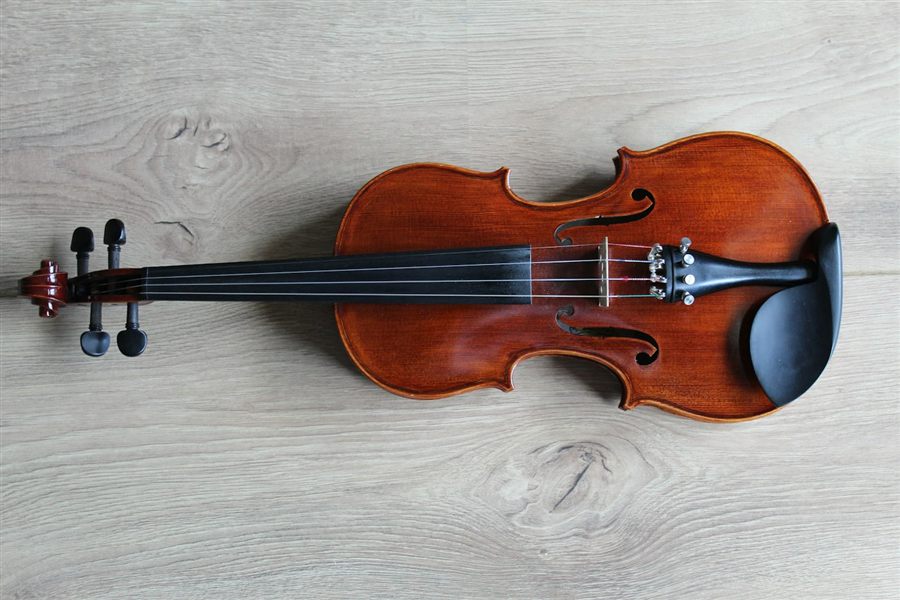
A used violin is a good buy when its condition is sound and the price matches the risk. Check the top, back and seams for cracks, the neck for its angle, the pegs for smooth turning, and play the instrument yourself with your own bow. The safest route is a violin shop that offers a trial period and a return policy; if you buy privately, have a luthier look at the violin first. Cracks in critical spots, unclear origin and a price that sounds too good are the most common reasons to walk away.
Decide first: what does the violin need to do?
Before you scroll through listings, settle size, budget and purpose. For children, the right size matters more than any question of tone (see violin sizes for children). For adults, a used instrument is optional, but at the same budget it often offers better build quality than a new one. Age alone does not make a violin better or more valuable. Condition, construction and setup decide that. If you are not sure the violin will stick, renting is a low-risk alternative; rental terms and prices vary by shop, so ask locally, and ask whether rent counts toward a later purchase.
Where to buy: violin shop, private seller or online
Violin shops and dealers
- You can usually play several instruments side by side, and many shops let you take one or two home overnight or for a few days. That matters, because a violin sounds different in a shop room than in your living room.
- Trial periods and return or exchange policies are common but differ from shop to shop. Ask for the terms in writing before you pay.
- The instrument is normally set up: a fitted bridge, a properly placed soundpost and fresh strings. A shop also has a reputation to protect, so major undisclosed problems are less likely.
- Prices are typically higher than for a comparable private sale. You pay for selection, advice and a safety net.
Private sales and classifieds
- Usually cheaper, but with no trial period, no returns and no professional opinion unless you arrange one yourself.
- Private sales are commonly "as is." Get the condition and the included accessories confirmed in the listing or on a short receipt. For legal questions, consult a consumer-rights resource.
- Online listings in particular include misdescribed instruments: invented origin claims, hidden damage, flattering photos. Without a chance to play the violin the risk is high.
- A private purchase is reasonable when you have held the violin yourself and bring someone who knows instruments, or have it checked beforehand.
Online marketplaces and shipping
Returns are often easier from commercial online sellers than from private sellers, but conditions differ, so ask who pays return shipping and keep every promise in writing. Shipping is hard on violins: a poorly packed instrument can arrive with a fallen soundpost or a collapsed bridge. Inspect the violin right after unpacking and document any damage with photos.
The condition check, step by step
Take your time, ideally in daylight with a small flashlight. Sit down and hold the violin over a soft surface so nothing is lost if it slips.
Cracks and seams
Look at the top and back in raking light; fine cracks show best when light skims across the surface. The location of a crack matters more than its length. Cracks along the ribs and small varnish cracks are less worrying. Serious ones are those near the soundpost, along the bass bar, at the neck joint, and any crack that runs into an f-hole. Such damage affects the structure of the body and is costly to repair.
Open seams, where the ribs have come away from the top or back, show up as buzzing or rattling. Tap gently with a knuckle around the purfling on top and back; an open spot sounds tinny. Open seams are common and usually cheap to glue, but they are a fair argument in price talks. Also run a fingernail over the joints.
Old repairs
A professionally repaired violin is not a flaw. Be wary of visible glue residue, misaligned edges, mismatched grain or cracks that have reopened. These point to amateur work. Ask what was repaired, when and by whom, and whether there is an invoice.
Neck, fingerboard and string height
Sight along the neck: it should sit straight and the fingerboard should not be warped. A neck that has sunk or pulled forward changes the string height and makes playing a struggle. As a rough guide, the imagined extension of the fingerboard surface meets the bridge about 27 mm (roughly 1 inch) above the top; a few millimeters either way are no problem. If the value is far off, take the violin to a shop. The fingerboard may show wear, but it should not have deep grooves under the strings and must be firmly glued down, with no rattle. Grooves can be fixed by dressing the board, which costs money (see costs below).
Pegs, fine tuners and scroll
The pegs should turn evenly and hold pitch without slipping or sticking. Stiff or slipping pegs are common and rarely a deal-breaker, but they are a price argument. Check whether the peg holes look worn and whether the scroll and pegbox are undamaged. Fine tuners on the tailpiece are handy for beginners and standard on student instruments.
Bridge, soundpost and tailpiece
The bridge should stand straight, be free of warping and sit cleanly on the top. A bridge that has been pulled forward can simply be straightened; a warped or badly fitted one has to be replaced. The soundpost is the small wooden dowel inside the violin between top and back. Its position has a large effect on tone, and moving it by just a millimeter or two can change the sound. You can see it through the f-hole with a flashlight. A leaning or missing soundpost is a frequent cause of dead spots and buzzing. How to judge bridge and post is covered in checking bridge position and soundpost. Setting the soundpost itself is a job for a luthier.
Varnish and general care
Worn varnish, small scratches and dings are cosmetic and do not affect the sound. Rosin dust left on the varnish for a long time bonds with it and can no longer be removed without damage; a quick wipe after playing prevents that. An instrument that looks cared for has often been treated well technically too.
The test play
- Bring your own bow and pieces you know well, so that you judge response and tone without an unfamiliar bow.
- Play all four strings in all positions, soft and loud, with string crossings. Listen for buzzing, uneven volume from string to string, and notes that sound dull or choked.
- Check that the strings are clearly separated: you should be able to bow one string without touching its neighbor.
- Play for at least fifteen minutes. If tone or tuning changes noticeably during that time, it is a warning sign.
- Have someone listen. The sound under your ear differs from what the audience hears.
- Compare several instruments with the same piece, and take breaks between tests to avoid decision fatigue. Notes help you keep the impressions apart.
- Old strings distort the impression; they sound tired and hold pitch poorly. New strings can make a dull violin surprisingly better (see the string comparison).
- An included bow counts too: it should be straight, the stick uncracked and the hair complete. More in bow quality: what to look for.
Warning signs and common traps
- A price too low for what is promised: Very cheap violin outfits often use poor materials and weak construction. Below a couple of hundred dollars, high string height, stiff pegs and an unbalanced bridge are common complaints.
- Famous names on the label: A label inside proves nothing, because such labels are easy to copy or merely indicate a model style. Claims of great age or high value without documentation are a red flag. More in certificates and appraisals explained.
- Cracks in critical spots, even if the seller calls them "only cosmetic."
- Photos only, no meeting: Blurry pictures, no close-ups of top, back and neck, and evasive answers are bad signs.
- Time pressure or payment upfront to a stranger.
- Unclear origin: A high-quality violin offered conspicuously cheap may be stolen. A seller who can explain where the instrument came from is a safer bet.
- Biased advice: Some teachers receive undisclosed commissions from dealers. For larger purchases, get a second, independent opinion.
- Buy cheap, repair expensive: On a violin worth a few hundred dollars, a single large crack repair (about $500 and up when the top has to come off, as of Oct. 2026) can cost more than the instrument.
Costs: what setup and repairs run
The figures below are guideline values from shop price lists and repair guides in the US (as of Oct. 2026). Many shops quote a firm price only after seeing the instrument, and rates vary by shop and region.
| Work | Guideline in USD |
|---|---|
| Basic maintenance visit (inspection, bridge and soundpost adjustment, peg treatment, light cleaning) | from about 35 |
| New bridge, fitted | about 50 to 250+ depending on quality and shop |
| New soundpost | about 70 |
| Open seam glued | about 15 to 30 |
| Small crack without removing the top | about 50 to 200 |
| Large crack that needs the top off | about 500 and up |
| Fingerboard dressing | about 60 to 120 |
| Fingerboard re-glue | about 30 to 50 |
| New pegs, fitted | about 120 plus the pegs |
| Bow rehair | about 90 |
So plan a cushion for setup, new strings and minor work when you buy used. One guide for beginner instruments suggests setting aside roughly $100 to $200. Whether a repair pays off depends on the value of the violin: on better instruments professional restoration makes sense, on very cheap ones almost never. Work on the top, the bass bar and the soundpost belongs with a luthier, because it affects the structure and the tone of the instrument.
Price orientation for the used market
Student violin outfits (violin, bow and case) from specialist sellers span roughly $299 to $1,500 (as of Oct. 2026). A used instrument should sit clearly below the new price of the same model; a margin of at least about 25 percent is a sensible starting point. There is no reliable general price list for the used market, because condition and construction vary widely. The price tiers and what each delivers are covered in budget tiers for used violins.
What should come with the violin
When buying used, look at the extras. A playable bow, a sturdy case, a chinrest and possibly a shoulder rest are part of the total price. Missing or damaged parts cost extra. Ask what is included, and weigh the price accordingly.
When an appraisal or second opinion makes sense
For an entry-level violin in the lower price range, a short look from a luthier is often enough. Many shops give a free verbal opinion or a quick condition check; ask about the fee beforehand. A written appraisal is something else: it typically starts around $150 (as of Oct. 2026), and some shops only write one above a minimum instrument value. It makes sense when:
- the violin is offered as old or as the work of a specific maker and the price reflects that,
- you need a documented value for insurance, resale or an estate,
- the price is in the thousands and you want to secure origin and condition.
Choose an appraiser who regularly deals in instruments of your kind. An appraisal rests mainly on maker identification and construction quality, and insurance values reflect replacement cost, not your personal impression of the sound. The tone remains your decision.
Quick checklist for the appointment
- Check photos and description beforehand; ask about repairs and accessories.
- Examine the violin in raking light for cracks, open seams and old repairs.
- Check neck, fingerboard, pegs, bridge and soundpost.
- Play for at least 15 minutes with your own bow, and let a second person listen if possible.
- Roughly estimate any repair needs and subtract them from the price.
- Get promises in writing; for larger amounts, involve a luthier before buying.