Saxophone
Yamaha YAS-62
Price: 185 EUR – 2.750 EUR
Price history
Cheapest seen
Most expensive seen
Availability: 8/10 (Common)
The original 1978/79 debut of Yamaha's long-running 62-series professional alto, developed over nearly seven years with classical saxophonist Eugene Rousseau and still treated by many players as the benchmark the later 62 II and 62 III revisions are measured against.
About the Yamaha YAS-62
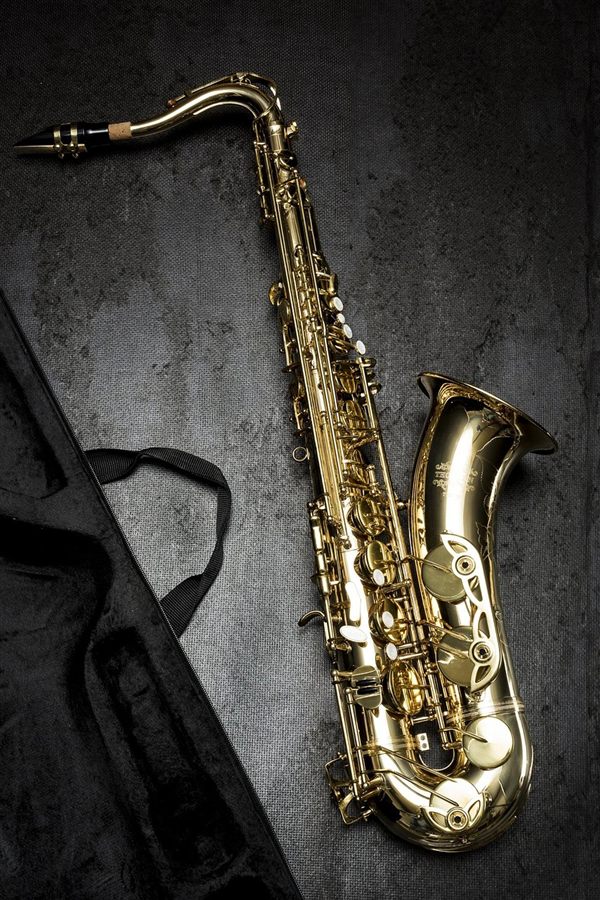
Built around a two-piece bell with hand-engraved decoration, the YAS-62 pairs a 62-style neck with tilting low-Bb spatula keys, High F# and Front F auxiliary keys, polyester key buttons and an adjustable thumb hook - a feature set aimed at genuine professional use rather than student convenience. Several dealers describe the brass itself as annealed for denser material and a clearer tone, a detail Yamaha's own published specifications don't explicitly confirm, so it's worth treating as a well-supported trade claim rather than a verified company spec. The horn shipped from the factory with a Yamaha 4C mouthpiece and was offered in gold lacquer as standard, alongside amber lacquer (62A), silver plate (62S) and unlacquered (62UL) finish options that Yamaha has carried forward into later 62-series generations. What set the original apart wasn't a single standout feature but the sheer depth of development behind it: nine prototypes refined over roughly seven years before release, aimed squarely at creating one alto capable of serving both classical and jazz players rather than specializing in either.
Where to buy
Platforms
Price
–
-
Reverb Yamaha YAS 62 Original pads set 185 EUR Best price View details
-
Reverb YAMAHA Yamaha YAS-62 G1 NECK Alto Saxophone [C91003] (09/23) 1.770 EUR View details
-
Reverb Vintage YAMAHA Purple Logo YAS-62 Alto Saxophone Lacquer Finish MADE IN JAPAN 1.888 EUR View details
-
Reverb YAMAHA Alto Saxophone YAS-62 G1 Neck [D38432] (09/17) 1.906 EUR View details
-
Reverb YAMAHA Yamaha YAS-62 G1 NECK Alto Saxophone [344413] (09/23) 1.953 EUR View details
-
Reverb NO TARIFFS - Yamaha YAS-62 Alto Saxophone Purple Logo 1.956 EUR View details
-
Reverb YAMAHA Alto YAS-62 G1 Neck Alto Saxophone SN.C6xxxx [C61674] (09/23) 1.959 EUR View details
-
Reverb YAMAHA YAS-62 G1 Neck Alto Saxophone, Ser. No. 30xxxx (09/30) 1.959 EUR View details
-
Reverb Yamaha YAS-62 Alto Saxophone 2.125 EUR View details
-
Reverb 【Special price】 Yamaha YAS-62 「YAS62」 Alto Saxophone 2.361 EUR View details
-
Reverb 【Special price】 Yamaha YAS-62 「YAS62」 Alto Saxophone 2.361 EUR View details
-
eBay Yamaha Yas-62 Alto [Saxophon Gold + Hartschalenkoffer] Kein Tarif in USA / Ex... 2.394 EUR View details
-
Reverb Yamaha Alto Saxophone YAS-62 2.750 EUR View details
No platform selected – pick at least one above.
Some links below are affiliate links. We may earn a commission at no extra cost to you.
Source: https://reverb.com/item/100948059-yamaha-alto-saxophone-yas-62
Sound character of the Yamaha YAS-62
Reviewer descriptions of the tone vary noticeably depending on what it's compared against: set against a TJ Sig Custom alto (itself described as sounding like a miniature tenor), the YAS-62 comes across as distinctly brighter, while another reviewer characterized it as 'not too bright' for an instrument in this price and professional tier, and found that switching to a Vandoren V12 mouthpiece pushed the tone toward something closer to a tenor's upper register. That range of description - brighter than one comparison instrument, not-too-bright on its own terms - points to a tone that sits in a flexible middle ground rather than leaning hard toward either a dark, covered sound or an aggressively bright one, with mouthpiece choice clearly able to shift it meaningfully in either direction.
What owners of the Yamaha YAS-62 say
The YAS-62 sits at 4.9 out of 5 across 43 Thomann ratings (39 five-star, 4 four-star), with the available written reviews consistently framing it as a safe, dependable professional choice: one reviewer specifically called it low-risk compared to competing brands and even found it outplayed Yamaha's own pricier Custom-series models in their hands, while another, upgrading after seven years on a student-level Yamaha, called it a genuine benchmark instrument. That near-unanimous praise comes with one older counterpoint worth weighing: a three-post forum discussion about the related YAS-62 II found it fell short of a Yamaha Custom Z specifically on intonation and classical tone, even though the reviewer liked the 62 II's initially darker character - a useful reminder that 'benchmark' and 'best in every category' aren't quite the same claim, and that player preference and specific repertoire can shift the verdict.
Playability & handling of the Yamaha YAS-62
A Thomann customer review ranked the YAS-62 above Eastman and P. Mauriat alternatives and above the Yanagisawa AOW1, finding Yamaha's key layout more natural to navigate than the Yanagisawa's, which the reviewer compared unfavorably to a student-level Buffet Crampon arrangement; the same reviewer noted it even played better in their hands than Yamaha's own pricier Custom 82Z and 875EX models, which were simply outside their budget. Another reviewer, upgrading after seven years on a Yamaha YAS-280 student horn, called the 62 a genuine benchmark instrument - a meaningful comparison since it reflects a player who already knew Yamaha's house sound from the bottom of the range. An older three-post forum discussion comparing the related YAS-62 II to a Yamaha Custom Z gives a useful counterpoint: one player who spent about two hours on both found the Custom Z responded more immediately and held better intonation and classical tone, describing the 62 II as darker-sounding at first (which they liked) but weaker specifically in classical playing and tuning - a reminder that 'benchmark' status doesn't mean every reviewer rates it as the best option in every context, just a dependable, low-risk one.
Recommended accessories & strings for the Yamaha YAS-62
The 4C mouthpiece Yamaha ships it with is a solid, dependable starting point rather than the ceiling of what the horn can do - one owner review specifically recommends swapping both mouthpiece and ligature (naming a Vandoren V12 mouthpiece and Optimum ligature as their own choice) to unlock a fuller, more tenor-like character in the upper register, treating the stock setup as a baseline to build from rather than a final answer. Beyond mouthpiece and ligature upgrades, care follows standard professional alto practice: regular pad and spring maintenance appropriate to an instrument built for sustained daily use rather than occasional practice.
Technical data for the Yamaha YAS-62
| Key | Eb (alto) |
|---|---|
| Bell | Two-piece, hand-engraved decoration |
| Neck | 62-style neck |
| Keys/mechanism | Tilting low-Bb spatula keys, High F# and Front F auxiliary keys, polyester key buttons, adjustable thumb hook |
| Finishes | Gold lacquer (standard), amber lacquer (62A), silver plate (62S), unlacquered (62UL) |
| Mouthpiece | Yamaha 4C (stock) |
| Development | 9 prototypes over approx. 7 years with Eugene Rousseau as chief consultant |
| Introduced | 1978 (development), 1979 (market introduction per most dealers) |
| Controls | No electronic controls - tone shaped entirely by embouchure, reed/mouthpiece choice and key mechanism |
Price history for the Yamaha YAS-62
Cheapest seen: 185 EUR · Most expensive seen: 2.750 EUR
Cheapest seen
Most expensive seen
The history of the Yamaha YAS-62
Yamaha's collaboration with classical saxophonist and educator Eugene Rousseau on this instrument began in 1972, with Rousseau serving as chief consultant across mechanical, acoustical and artistic dimensions - body taper, tone hole placement and intonation on the acoustic side, with the artistic dimension treated internally as the most important of the three. Development proceeded through nine prototypes over nearly seven years: Rousseau would take a prototype and play it for months at a stretch, then return to Japan with detailed notes that Yamaha's engineers used to refine the next version. That process finally yielded the YAS-62 in 1978 (retailers more commonly cite 1979 as the model's actual market introduction), and the result became one of the most widely played professional altos in the world - a reputation built specifically on serving classical and jazz players equally rather than specializing narrowly. The line has since gone through two further major revisions, the YAS-62 II and the 2013 YAS-62 III, with Yamaha's amber lacquer and unlacquered finish options from the original still carried in current product materials. Rousseau died on August 24, 2024.
About Yamaha as a manufacturer
Yamaha entered the saxophone business in 1967, anchoring production from 1970 at a dedicated factory in Toyooka. The original YAS-62 stands as the foundation of what became the company's flagship 62-series - not an afterthought refinement of an existing model, but the result of a deliberate, years-long development partnership with a specific player whose classical background shaped the instrument's tonal priorities from the start. That approach - inviting a respected performer to actively shape acoustic design over years of prototype testing rather than relying purely on in-house engineering - set a template Yamaha would continue to draw on as it revised the 62 line through its later II and III generations.
Notable players & recordings featuring the Yamaha YAS-62
Eugene Rousseau, the renowned classical saxophonist and pedagogue who served as Yamaha's chief consultant on the YAS-62, shaped the instrument through years of hands-on prototype testing rather than lending his name to an already-finished design - a genuine development partnership rather than a simple endorsement. No further independently verified notable players or recordings tied specifically to this original model turned up in available sources.
Related guides
 Buying a Used Saxophone: What to Check
View details
Alto, Tenor, Soprano: Which Saxophone to Start On
View details
Vintage Saxophones From Major Makers: What Collectors Look For
View details
Matching Mouthpiece and Reed: How Tip Opening and Reed Strength Work Together
View details
Saxophone Overhaul: What a Full Pad and Cork Replacement Actually Involves
View details