Saxophone
Yamaha YTS-62
Price: 88 EUR – 3.040 EUR
Price history
Cheapest seen
Most expensive seen
Availability: 6/10 (Common)
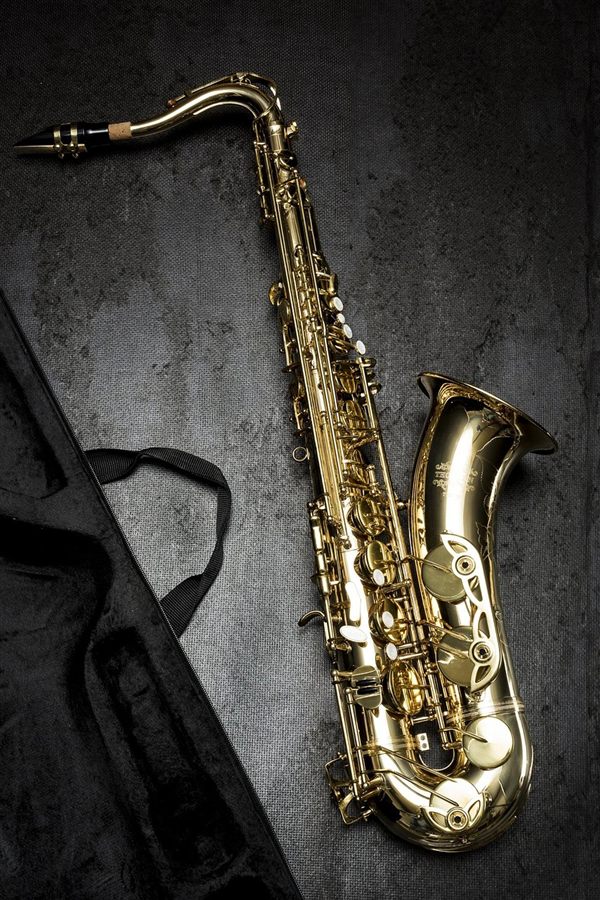
The Yamaha YTS-62 is Yamaha's flagship professional-series tenor saxophone, built from annealed yellow brass with a narrower-taper 62-style neck, widely rated by independent reviewers as one of the finest tenors ever built and still the benchmark its own intermediate sibling, the YTS-52, was designed to echo.
About the Yamaha YTS-62
Built from annealed yellow brass for refined resonance and durability, the YTS-62 pairs its signature 62-style neck - a slightly narrower bore taper for faster response, tighter control and a more compact intonation target - with a hand-engraved two-piece bell. Keywork includes high F# and front F auxiliary keys, polyester key buttons and an adjustable thumb hook, plus a specifically improved low B-to-C# mechanism designed to seal cleanly for clear response at the bottom of the range. It ships with Yamaha's well-regarded TS4C mouthpiece and a durable case. The model has gone through several generations since its original "purple logo" era - including a Mark 1 variant with tilting table keys - through to today's Mark III (YTS-62III), and the professional YTS-52 line borrows its body tube and bore directly from this same horn.
Where to buy
Price
–
-
Reverb Yamaha YTS 62 Original spring set 88 EUR Best price View details
-
Reverb Yamaha YTS 62 Original pads set 185 EUR View details
-
Reverb Yamaha YTS-62 Tenor saxophone 1.957 EUR View details
-
Reverb NO TARIFFS - Yamaha YTS-62 Tenor Saxophone Purple Logo 2.422 EUR View details
-
Reverb YAMAHA Tenor YTS-62 G1 Neck Tenor Saxophone SN.33xxxx All pads replaced [337790] (07/03) 2.449 EUR View details
-
Reverb YAMAHA Tenor YTS-62 62Neck Tenor Saxophone SN.F3xxxx [F32221] (09/07) 2.449 EUR View details
-
Reverb YAMAHA [Slightly Damaged - Special Price] Yamaha YTS-62 Tenor Saxophone [Shipped after adjustment & setup] [5 years of free key balance adjustment] [Includes everything you need for playing and maintenance] [Autumn SUPER SALE] 3.040 EUR View details
No platform selected – pick at least one above.
Some links below are affiliate links. We may earn a commission at no extra cost to you.
Sound character of the Yamaha YTS-62
Despite some players worrying a Yamaha might lean thin or overly bright, the YTS-62 produces lovely rich notes with excellent intonation, bags of power and projection, and remarkably even response across the entire register.
What owners of the Yamaha YTS-62 say
Sentiment across independent reviews and forum discussion is close to unanimous enthusiasm, with phrases like "they sing and don't disappoint" and praise for superb action requiring very little maintenance coming up repeatedly. Several owners who've played both purple-logo Yamahas and vintage French horns conclude the YTS-62 matches or beats earlier premium saxophones on practical playability and reliability, while costing a fraction of a vintage Selmer Mark VI. The purple-logo era specifically draws collector interest - one traced example even carries documented provenance to a West End production of Evita - but the broader consensus is that non-purple-logo units of the same Mark generation play identically for considerably less money.
Playability & handling of the Yamaha YTS-62
An in-depth review of the original Mark 1 "purple logo" model calls it simply one of the finest tenors ever built, praising its design, build quality and action, with a tone described as versatile and responsive, carrying bags of power and projection alongside remarkable evenness across the whole register. Respected saxophone expert Stephen Howard is quoted in forum discussion making a nearly identical claim - a review widely cited as having influenced purchasing decisions among serious players. One purple-logo owner reports intonation so accurate it outperforms their vintage 1967 Selmer Mark VI, pushing back against any assumption that a Yamaha would sound thin or overly bright in comparison to classic French horns. Non-purple-logo Mark 1 units are described as essentially the same instrument, often available for less simply because they lack the specific badge collectors seek.
Recommended accessories & strings for the Yamaha YTS-62
The included TS4C mouthpiece is a well-regarded starting point that many players keep using long-term. Forum veterans note that fitting a C1 neck to a newer production YTS-62 can bring back some of the tonal character associated with the original purple-logo horns. Standard saxophone upkeep applies: wiping down and swabbing after playing, cork grease, periodic pad care, and an annual service check.
Technical data for the Yamaha YTS-62
| Body | Annealed yellow brass |
|---|---|
| Neck | 62-style, narrower bore taper |
| Bell | Two-piece, hand-engraved |
| Keys | High F# and front F auxiliary, polyester buttons, adjustable thumb hook |
| Mechanism | Improved low B-C# seal |
| Included | TS4C mouthpiece, case |
| Generations | Mark 1 ("purple logo"), Mark II, Mark III (YTS-62III) |
| Related model | Body tube and bore shared with the intermediate YTS-52 |
Price history for the Yamaha YTS-62
Cheapest seen: 88 EUR · Most expensive seen: 3.040 EUR
Cheapest seen
Most expensive seen
The history of the Yamaha YTS-62
Introduced as part of Yamaha's 62 series alongside the YAS-62 in 1979, the YTS-62 has remained the brand's most popular professional tenor saxophone for decades.
About Yamaha as a manufacturer
Yamaha entered the saxophone market in 1967 with its first alto and tenor models, anchoring production from 1970 at a dedicated factory in Toyooka. The YTS-62 emerged from a multi-year development program built around close collaboration with a noted classical saxophonist and input from leading jazz players, aimed at genuine cross-genre versatility - the same development philosophy behind the companion YAS-62/YSS-62 alto and soprano models launched in 1978 following Yamaha's collaboration with saxophonist Eugene Rousseau. The YTS-62 went on to become Yamaha's best-selling professional tenor and the reference point the brand's own intermediate YTS-52 was built to echo, carried forward through successive Mark generations without losing the design DNA that earned the original purple-logo horns their reputation.
Related guides
 Buying a Used Saxophone: What to Check
View details
Alto, Tenor, Soprano: Which Saxophone to Start On
View details
Vintage Saxophones From Major Makers: What Collectors Look For
View details
Matching Mouthpiece and Reed: How Tip Opening and Reed Strength Work Together
View details
Saxophone Overhaul: What a Full Pad and Cork Replacement Actually Involves
View details