Saxophone
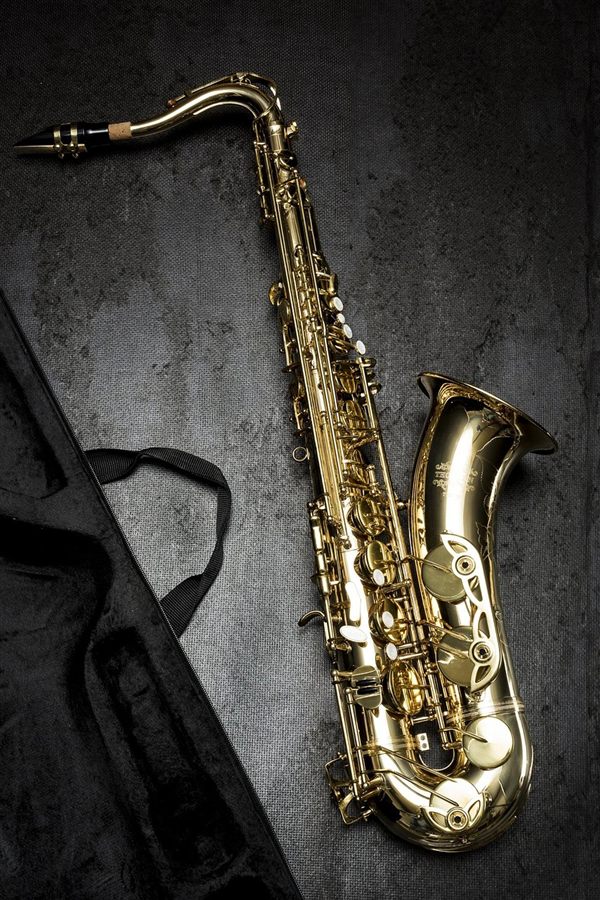
Yamaha YTS-62II
Price: 2.794 EUR – 2.794 EUR
Price history
Cheapest seen
Most expensive seen
Availability: 0/10 (Very rare)
The second generation of Yamaha's most popular professional tenor, introduced in 2003, refining the original 62's neck and octave key for smoother response while carrying forward the same annealed brass body and hand-engraved bell that built the model's reputation.
About the Yamaha YTS-62II
The YTS-62II keeps the annealed yellow brass body, neck and bell with hand-engraved decoration that defined the original YTS-62, while reworking the two components players and technicians point to most often as the real difference between generations: a redesigned neck (Yamaha's own materials describe a slightly narrower bore for faster response and greater control) and a reworked octave key mechanism. Silicone-treated leather pads and blue steel needle springs round out the refresh, alongside tilting low-Bb spatula keys, front F and high F# auxiliary keys, and a neck receiver flexible enough to accept necks designed for Yamaha's pricier Custom Z and Custom EX models rather than locking a player into the stock 62-style neck alone. Introduced in 2003 as part of a broader 62-series refresh (and replaced in turn by the 'New 62' YTS-62III in 2013), the II generation sits between two eras some players treat very differently: the earlier 'Purple Label' originals from the early 1980s, which carry a reputation among collectors and players for exceptional craftsmanship, and the modern production this horn represents, where critics and dealers disagree on how much of that older reputation reflects real material differences versus nostalgia for horns built when quality control allegedly ran tighter.
Where to buy
-
Reverb NO TARIFFS - Yamaha YTS-62II Tenor Saxophone 2.794 EUR Best price View details
No platform selected – pick at least one above.
Some links below are affiliate links. We may earn a commission at no extra cost to you.
Source: https://reverb.com/item/84706326-no-tariffs-yamaha-yts-62ii-tenor-saxophone
Sound character of the Yamaha YTS-62II
An independent trade review (available only as a secondhand summary) described the tone as rich and well-centered with strong projection, crediting the redesigned neck and blue steel springs specifically for that character. A dealer comparison across 62 generations offered a more measured take, describing the II's voice as very clear and round - leaving it up to mouthpiece choice to add character and interest, in contrast to how the same dealer described the earlier 'Purple Label' original as retaining more inherent tonal complexity on its own. That comparison matters practically: a player drawn to a more immediately characterful, less neutral voice out of the box may want to budget for a different neck or mouthpiece pairing, while a player who values a clean, centered foundation they can shape themselves will likely find the II's stock tone a good starting point as-is.
What owners of the Yamaha YTS-62II say
The YTS-62II holds a strong 4.8 out of 5 across 33 Thomann ratings (27 five-star, 5 four-star, only 1 at two stars), with reviewers consistently praising the key mechanism's responsiveness and overall sound, while isolated complaints touch on factory setup quality and included accessories (case capacity, reed quality) rather than the instrument's fundamentals. Broader community discussion summarized from Reddit paints a fairly practical picture: owners consider it a sound financial choice that holds resale value well, recommend it for advanced high school through some graduate-level students as a professional-caliber horn at a comparatively accessible price, and describe it as a reliable daily practice instrument once properly set up. The more critical thread running through that same discussion concerns perceived cost-cutting after the model's repositioning as a 'top intermediate' horn, alongside scattered reports of screws loosening - complaints that several sources note apply to the broader YTS-62 line generally rather than being specific to the II generation. Owners who've played both the II and the later III generation often describe them as nearly indistinguishable in practice, suggesting the III's changes were more incremental refinement than a meaningful upgrade for most players.
Playability & handling of the Yamaha YTS-62II
A Thomann customer review from a player who'd previously owned a Selmer Paris SA80 and a Bauhaus Walstein TS Pro - using this horn as a mid-to-high-tier backup or for student concert and marching bands - specifically praised the 'YTS62 MK II key mechanism' as responsive with no sticking or delays, and found the stock mouthpiece decent while also testing it against a Selmer C* and a metal Vandoren. Not every unit arrives flawless, though: a separate reviewer reported needing to adjust one key and one spring before the horn played properly, a reminder that factory setup quality can vary even on a well-regarded professional model. A self-described semi-pro player who'd previously owned a poor-quality instrument and shopped with a budget under £3,500 called both the mechanism and the resulting sound 'awesome' and recommended it without reservation. An independent trade review (summarized secondhand, as the full text wasn't directly accessible) specifically credited the redesigned neck and blue steel springs for key placement that suits a range of hand sizes, while noting plainly that the horn isn't handmade - a fair caveat for a mass-production instrument competing in a space where some buyers specifically value hand-finishing.
Recommended accessories & strings for the Yamaha YTS-62II
Several reviewers found room to improve on the stock mouthpiece, pairing the horn with a Selmer C* or a metal Vandoren instead to shape the tone to their taste rather than treating the factory setup as final. One reviewer specifically called out the included reeds as below par and worth upgrading immediately rather than persisting with them. For anyone specifically chasing the character of the earlier 'Purple Label' originals, swapping in a C1-style neck is suggested as a practical way to approximate that older tone on a 62II or 62III without hunting down an increasingly expensive vintage horn outright - a reminder that the neck, more than the body, is where most of the tonal personality between 62 generations actually lives.
Technical data for the Yamaha YTS-62II
| Body/bell/neck | Annealed yellow brass, hand-engraved bell |
|---|---|
| Neck (vs. original) | Redesigned, slightly narrower bore per Yamaha |
| Neck receiver | Compatible with Custom Z/Custom EX necks |
| Octave mechanism | Redesigned vs. original YTS-62 |
| Springs | Blue steel needle springs |
| Pads | Silicone-treated leather |
| Keys/mechanism | Tilting low-Bb spatula keys, front F and high F# auxiliary keys, polyester key buttons |
| Mouthpiece | Yamaha 4C or G1H (sources vary) |
| Introduced | 2003 (replaced by YTS-62III in 2013) |
| Controls | No electronic controls - tone shaped entirely by embouchure, reed/mouthpiece choice and key mechanism |
Price history for the Yamaha YTS-62II
Cheapest seen: 2.794 EUR · Most expensive seen: 2.794 EUR
Cheapest seen
Most expensive seen
The history of the Yamaha YTS-62II
The YTS-62II arrived in 2003 as part of a broader refresh of Yamaha's 62 series, a lineage that traces back to the original YTS-62/YAS-62 developed over nearly seven years with classical saxophonist Eugene Rousseau starting in 1972. Rather than reworking the proven annealed-brass body and hand-engraved bell that had built the 62's reputation, Yamaha's 2003 update focused specifically on the neck and octave key - the components most often singled out as the real points of difference between 62 generations - alongside updated springs and pads. That targeted, iterative approach continued a decade later with the 2013 'New 62' YTS-62III, which replaced the II as Yamaha's current model, leaving the II as a now-discontinued but still widely played and traded middle chapter in the 62's four-decade history, sitting between the collector-prized early 1980s 'Purple Label' originals and the current III generation.
About Yamaha as a manufacturer
Yamaha entered the saxophone business in 1967, anchoring production from 1970 at a dedicated factory in Toyooka, and built the original 62 series into one of the most widely played professional alto and tenor lines in the world through a deliberate, years-long development partnership with classical saxophonist Eugene Rousseau rather than pure in-house engineering. The YTS-62II reflects how Yamaha has managed that legacy since: rather than reinventing a design that already worked, the company has repeatedly made targeted, generation-by-generation refinements - neck geometry, octave mechanism, springs and pads here, further neck and ergonomic changes in the subsequent III generation - while deliberately preserving the annealed-brass construction and hand-engraved bell that gave the original its reputation in the first place.
Related guides
 Buying a Used Saxophone: What to Check
View details
Alto, Tenor, Soprano: Which Saxophone to Start On
View details
Vintage Saxophones From Major Makers: What Collectors Look For
View details
Matching Mouthpiece and Reed: How Tip Opening and Reed Strength Work Together
View details
Saxophone Overhaul: What a Full Pad and Cork Replacement Actually Involves
View details
Similar instruments
Yamaha YAS-280
Yamaha YTS-62
Yamaha YAS-62
Yamaha YAS-23
Yamaha YTS-52
Yamaha YAS-52