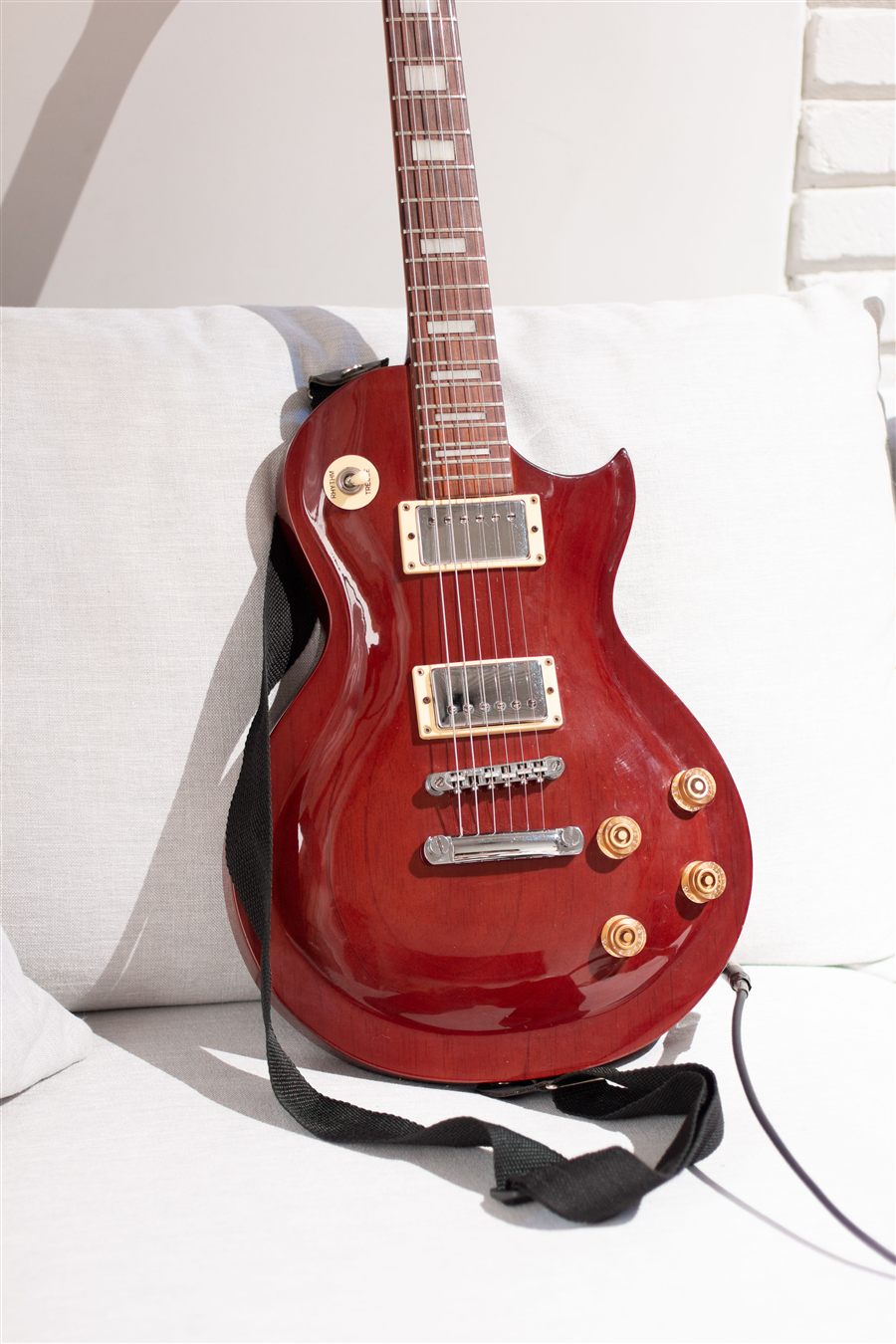
Short answer: Most first-guitar regrets come from a bad budget and too little hands-on testing, not from picking the wrong brand. The whole budget goes into the guitar, while the amp, accessories and a proper setup get squeezed or forgotten. Plan the total cost, play the actual instrument before you commit, and have it set up once, and you avoid most of the classic mistakes.
The most common beginner mistakes at a glance
- Buying on looks or brand alone – feel, weight and neck shape vary even within one model.
- Buying too cheap – the very cheapest guitars tend to stay out of tune or feel uncomfortable, which takes the fun out of learning.
- Buying too expensive – a "forever guitar" before you know your style is risky, since taste and genre often shift in the first year or two.
- Forgetting or skimping on the amp – without an amp there is no electric guitar sound, and a weak amp makes even a good guitar sound thin and buzzy.
- Not budgeting for accessories – cable, strap, picks, tuner, spare strings and a case add up.
- Ignoring setup – a poorly adjusted guitar feels stiff and drifts out of tune even if the instrument itself is fine.
- Overlooking scale length and neck feel – an uncomfortable guitar stays in its stand.
- Skipping a return window – it can take a few weeks to know whether weight and feel truly fit.
- Buying too much gear at once – pedals and effects are not needed on day one; a guitar, amp, tuner, cable and a few picks are enough to start.
Budget planning: guitar, amp and accessories
The budget should not all go into the guitar. In the US, a solid beginner guitar from an established maker typically falls around 150 to 250 USD, with 250 to 400 USD adding better materials and more consistent quality control (rough ranges, as of Oct. 2026). Accessories add up too: a case runs roughly 30 to 100 USD, spare strings about 10 to 15 USD, picks 5 to 10 USD, and occasional maintenance around 50 to 75 USD per year (as of Oct. 2026).
| Item | Rough range (as of Oct. 2026) |
|---|---|
| Beginner guitar | about 150 to 400 USD |
| Starter pack (guitar, small amp, extras) | about 200 to 300 USD |
| Buying guitar, amp and extras separately, with a better amp | about 430 to 470 USD |
| Case or gig bag | about 30 to 100 USD |
| Spare strings | about 10 to 15 USD |
| Picks | about 5 to 10 USD |
| Occasional maintenance per year | about 50 to 75 USD |
| Professional setup | varies by shop, get a quote |
Later costs depend on the shop. A fret level on a used guitar is often quoted around 150 USD, a full refret roughly 300 to 600 USD (as of Oct. 2026). These matter mostly for used purchases; see buying a used electric guitar.
Too cheap or too expensive: where is the sensible middle?
Rock-bottom guitars are seldom a bargain. Loose tuners drift, uneven frets buzz, and a neck may warp. That is a matter of quality control, not of the label. A beginner also does not need a high-end, handcrafted instrument. The middle of the market delivers solid hardware, usable pickups and a guitar that resells well later. If you find one in that range that feels good in your hands, it will usually serve you better than the priciest model your wallet allows.
Whether the price buys premium woods or special finishes is secondary at the start; background in the tonewood debate and nitro versus polyurethane.
Starter pack or buying separately
Starter packs usually pair a Stratocaster-style guitar with a small 10 to 15 watt practice amp, plus a cable, picks and sometimes a strap and case. Named-brand packs are a sensible choice for a complete beginner and are commonly priced about 10 to 25 percent below buying every part separately.
- Pros: one purchase, a real saving, enough to find out whether you enjoy playing.
- Cons: the amp is often the weak link, and the small extras are basic quality. A mediocre amp makes a good guitar sound thin and uninspiring.
- Upgrade path: if you can spend a bit more, buy the guitar and amp separately, and upgrade the amp first, ideally to one with a headphone output.
Generic no-name packs are usually not worth it, because the saving rarely makes up for the drop in amp quality.
The amp: the part most often forgotten
An electric guitar only sounds like one through an amplifier. For home practice, a small amp in the 10 to 30 watt range with a headphone output is plenty. Solid-state amps are light and affordable, modeling amps offer many sounds and effects in one box, and tube amps sound warm and dynamic but are heavier and need more upkeep. Solid-state or modeling is the easy start. Work inside an amplifier belongs strictly with a qualified technician.
Scale length, neck profile and fit
The two classic designs differ in scale length: Stratocaster-style guitars use 648 mm (25.5 in), Les Paul-style guitars 628 mm (24.75 in). A shorter scale is a little easier on small hands; a longer one is often described as snappier. Nut width on most models sits around 42 to 43 mm. Neck profile, such as a soft C or a flatter modern shape, decides how the neck sits in your hand: small hands often prefer slimmer profiles, large hands thicker ones. Only handling a guitar tells you. For more on the two designs, see Stratocaster or Les Paul, and for how neck and body are joined, neck construction explained.
Kids and short scale
Children roughly between 6 and 11 years old can use short-scale models of about 480 to 580 mm. Choice is smaller than for adult guitars. Body and hand size matter more than age: a child who cannot reach the frets or carry the guitar on a strap loses interest quickly. Moving up to a standard scale as they grow is no problem.
Left-handed players
Left-handed guitars are built as mirror images. They exist, but the choice is narrower, with fewer models, colors and finishes, and they typically cost about 10 to 20 percent more (as of Oct. 2026). You rarely find them in stores to try. Restringing a right-handed guitar is possible, but the nut must be replaced or recut and the bridge adjusted, otherwise you end up with buzzing and tuning trouble. That is shop work; varies by shop, get a quote. As a rule, play the way your hands feel natural; if unsure, hold both versions briefly. Being left-handed is no disadvantage in music.
Setup: do not ignore it
Even new guitars are not automatically well set up. A setup covers neck relief, string height and intonation, in that order. It is usually the cheapest step to make a guitar noticeably better to play. See electric guitar setup explained for details. Two quick self-checks help:
- Intonation: Touch a string lightly at the 12th fret to get a harmonic, then fret the same note. Both should match. If not, the bridge needs correcting.
- Neck relief: Press a string at the first fret and near the last, and tap in the middle. A small gap, around the thickness of a business card (about 0.02 inch), is a common starting point.
The truss rod reacts to temperature, humidity and changes in string gauge. If you adjust it, use very small steps (no more than about an eighth to a quarter turn), let the neck settle and recheck. If the rod is stiff to turn or nothing changes, stop and see a technician. Tremolo systems need their own approach; see tremolo systems explained.
String choice
String gauge changes tension and feel. Lighter sets are easier to fret; heavier ones sound fuller but pull harder on the neck. Switching, for example, from a 9 to a 12 set can call for new relief and intonation. A light set is fine to start. Change strings regularly, since old ones sound dull and hold tuning worse, and wipe them after playing to extend their life.
Accessories: what you really need
- Cable: a decent instrument cable; crackling cheap cables are a common source of noise.
- Tuner: essential.
- Strap: lets you test balance and weight standing up. Neck-heaviness only shows on a strap.
- Picks and spare strings: cheap, but needed right away.
- Gig bag or case: protects in transit. A padded gig bag does for daily carrying; a hard case protects better.
- Care: a cloth and, for unfinished rosewood or ebony fretboards, a suitable fretboard oil. Finished maple boards are not oiled. Spray cleaner on the cloth, not directly on the guitar.
Keep humidity around 50 to 60 percent and temperature about 59 to 77 °F, and let a guitar sit in its case for a couple of hours after a big temperature change.
How to test properly
- Play on a strap, standing and sitting, not just holding it.
- Play every string in several positions: buzzing, dead spots, uneven sustain?
- Check fret ends for smooth edges and even fret height.
- Check intonation with the 12th-fret harmonic.
- Turn pots and switches: they should not crackle or hiss.
- Check tuners for play and smooth action, and see that tuning holds.
- Inspect the neck joint and finish for flaws.
- Bring an experienced player if you can, and try the guitar through an amp similar to the one you will use at home.
For used purchases also check neck straightness, signs of repair and that the truss rod works. A seller who refuses a test play is a red flag. A refinished guitar is often worth only about half of one with an original finish, and a repaired headstock can halve the value (as of Oct. 2026). More in the used-guitar guide.
Myths about the first purchase
- "More expensive is always better." Not for beginners. Up to a point, extra money buys better parts; beyond it, mostly looks and handwork. Fit matters more than prestige.
- "The amp is secondary." A guitar sounds only as good as the amp it plugs into.
- "Setup is for pros." Beginners benefit right away from a clean setup.
- "Lefties should learn right-handed." Your dominant hand decides; playing against it only adds frustration.
- "A famous brand means quality." Even known names ship weak individual guitars. Feel and build quality decide.
- "The first purchase has to be perfect." Guitars can be resold; none of these mistakes is permanent.
For more on pickups, which often shape the sound, see single-coil versus humbucker.